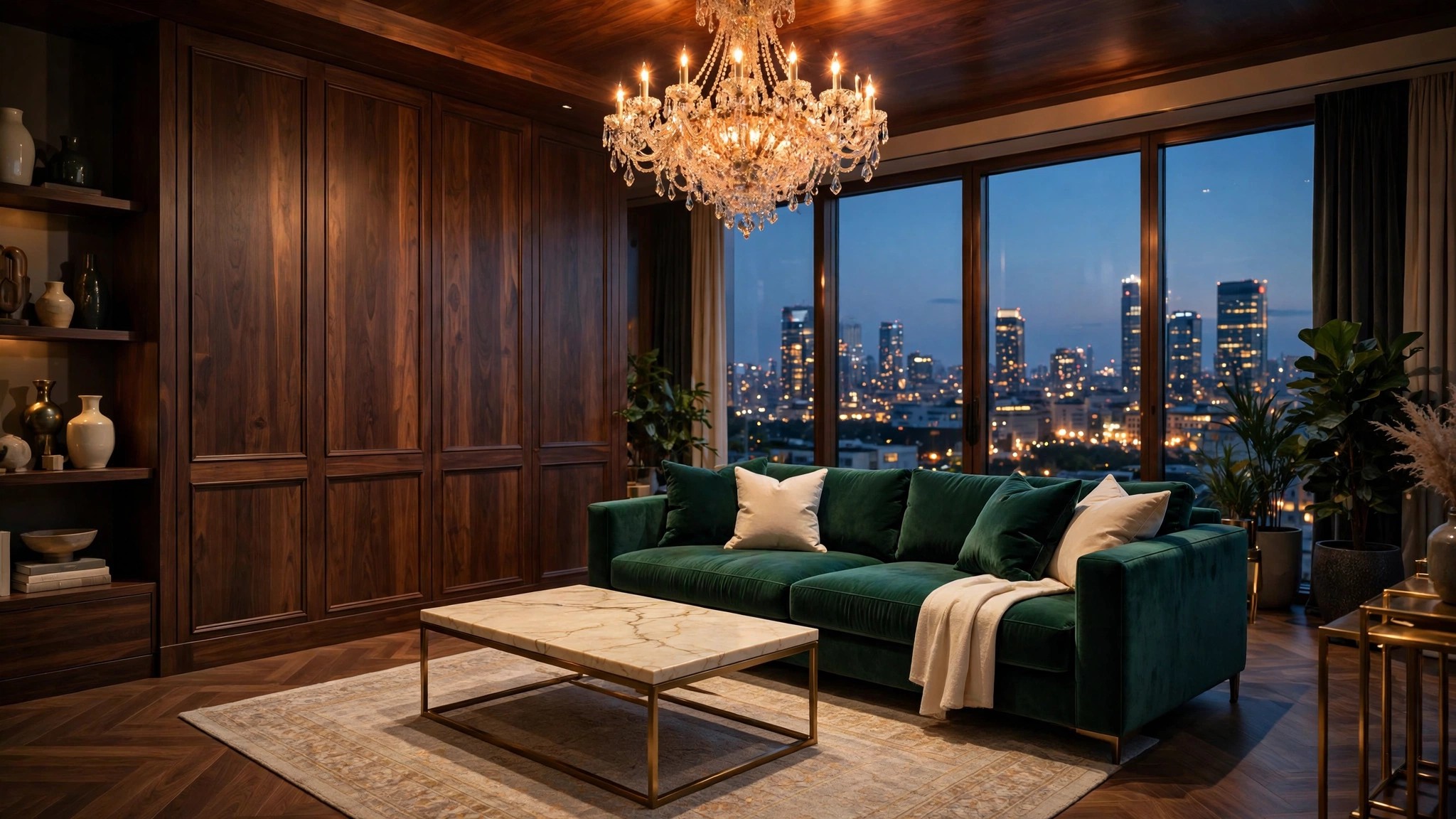
There is a reason five-star hotels, high-end restaurants, and designer homes all feel instantly special the moment you walk in. It is rarely just the furniture or the square footage. It is the lighting. Luxury lighting design ideas are the fastest, most affordable way to make any room look expensive, and you do not need an electrician or a renovation budget to get most of them right.
The secret is simple: luxury rooms are never lit by a single bright ceiling light. They glow from several soft sources at different heights, in warm tones, with dimmers that let you tune the mood. Below are twelve practical lighting ideas you can use in your own home, each with a clear how-to and a common mistake to avoid.
1. Go Oversized with the Chandelier
One of the most reliable luxury lighting design ideas is to choose a chandelier that is bigger than feels safe. Designers routinely hang fixtures 24 to 36 inches wide over a standard dining table, and the drama of scale is what makes the room feel expensive.
How to do it: Size the chandelier to about half to two-thirds the width of the table beneath it, and hang it so the bottom sits roughly 30 to 36 inches above the tabletop. Crystal, alabaster, or sculptural brass all read as luxury when they are generously sized.
What to avoid: Do not size up a cheap fixture to get the effect. A tiny, flimsy fixture at the wrong scale looks worse than a modest one. If budget is tight, a single oversized rattan or paper lantern pendant gives scale and warmth without the chandelier price tag.
2. Layer Ambient, Task, and Accent Light
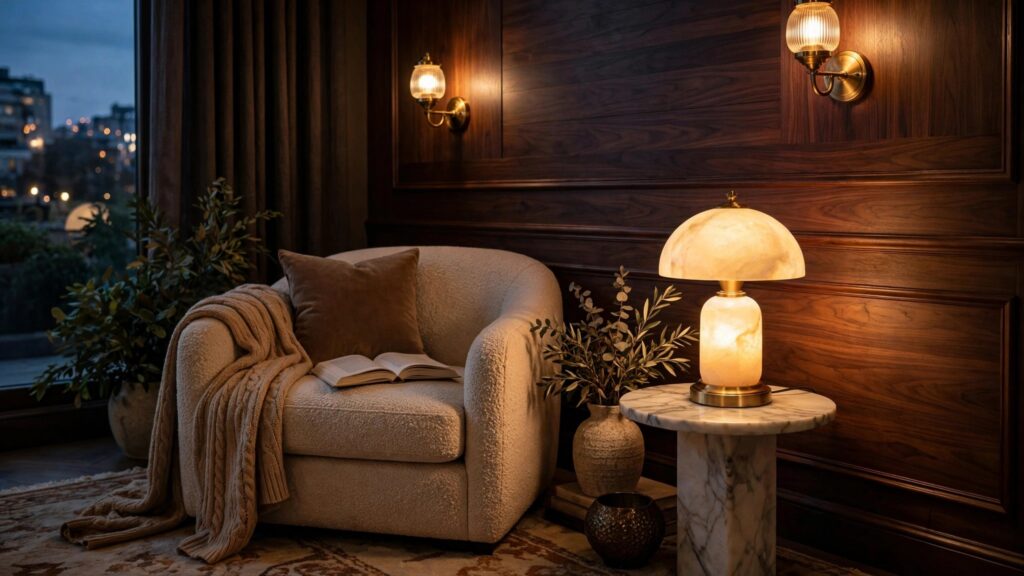
Professional lighting designers think in three layers: ambient light for overall glow, task light for reading and cooking, and accent light to highlight art, plants, or architectural details. Luxury lighting design almost always uses all three in every main room.
How to do it: In a living room, that means a ceiling fixture or cove lighting for ambient, a reading lamp by the armchair for task, and small picture lights or spotlights aimed at artwork for accent. Three layers at three different heights create depth.
What to avoid: Relying on one overhead light per room. A single source creates harsh shadows, flat walls, and that dreaded interrogation-room feeling. If you change nothing else, add a second and third source.
3. Switch Every Bulb to Warm White
Bulb color temperature is one of the most underrated luxury lighting design ideas. Cool white and daylight bulbs (4000K and up) make wood tones look gray and skin look washed out. Warm white around 2700K is the color of candlelight, hotel lobbies, and expensive restaurants.
How to do it: Walk through your home and replace every bulb above 3000K with 2700K LEDs. Keep the change consistent room to room so the glow flows naturally from space to space.
What to avoid: Mixing warm and cool bulbs in the same sightline. A warm lamp next to a daylight downlight looks accidental and cheap, even if both fixtures are beautiful.
4. Put Dimmers on Everything
Dimmers are the cheapest luxury upgrade in existence. The ability to lower the lights after dinner transforms a room from bright to intimate in seconds, which is exactly why restaurants and hotels depend on them.
How to do it: Replace standard switches with dimmers in the living room, dining room, and bedroom first. Make sure your LED bulbs are labeled dimmable, because non-dimmable LEDs will flicker and buzz.
What to avoid: Buying the dimmer and ignoring the bulb. A dimmer paired with the wrong LED is worse than no dimmer at all, so check the bulb box before you install.
5. Spotlight Your Art with Picture Lights
Hotels and galleries use small picture lights over artwork, and the effect reads as instant sophistication. A lit painting becomes a focal point, and the warm pool of light on the wall adds a layer of glow the rest of the room can borrow.
How to do it: Mount a slim LED picture light a few inches above the frame, centered and angled so the light washes the canvas evenly without glare. Battery-powered versions install in minutes with no wiring.
What to avoid: Lighting every wall evenly like an art fair. Choose one or two key pieces to highlight. The contrast between lit art and soft shadow elsewhere is what creates the luxury feeling.
6. Hide LED Strips Behind Molding and Shelves
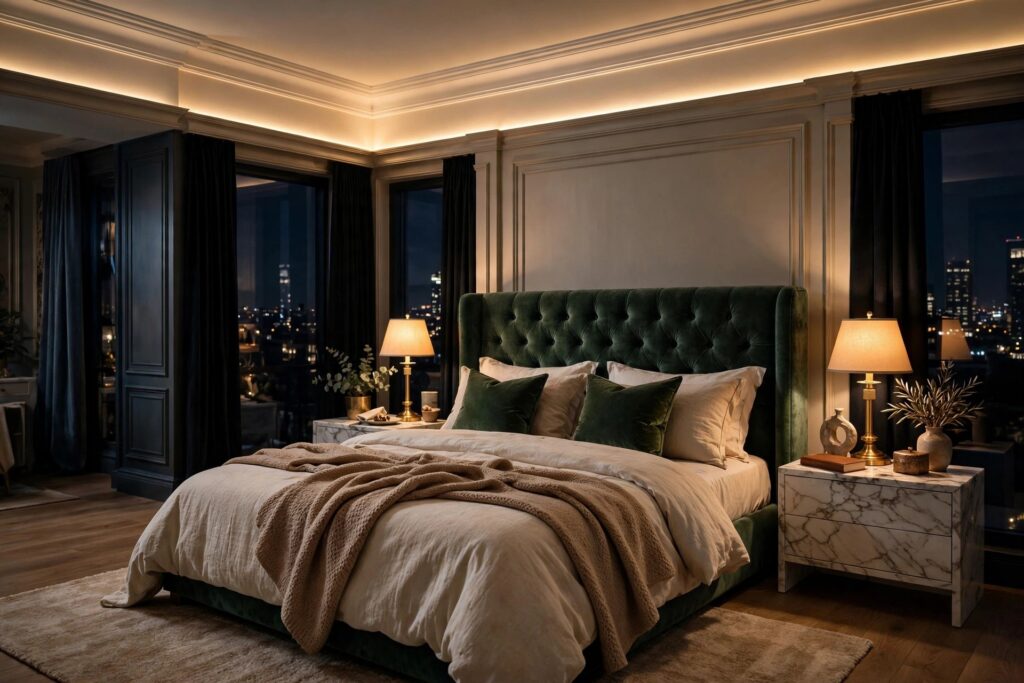
Indirect light that you can see but cannot source feels magical. Coves behind crown molding, strips under floating shelves, and glow behind a headboard give rooms a soft halo that flatters everything it touches.
How to do it: Use warm-white LED strip lights with an aluminum channel so the glow is even, and hide the strip itself behind trim, a shelf lip, or a valance. Dimmable strips on a remote are ideal for living rooms and bedrooms.
What to avoid: Letting the bare strip show. If you can see the dots of the LEDs, the illusion breaks. Always recess the strip so only the glow is visible. For more room-wide inspiration, see our guide to luxury living room decor ideas.
7. Use Sculptural Table Lamps in Pairs
Matching table lamps on either side of a sofa, console, or pair of nightstands create symmetry, and symmetry is one of the oldest signals of luxury. Alabaster, onyx, porcelain, or brass bases look expensive even at moderate prices.
How to do it: Choose shades in a warm linen or silk that soften the bulb glow, and size the lamp so the shade’s bottom edge sits roughly at eye level when you are seated. Pairs matter more than price.
What to avoid: Bare bulbs with no shade, which create harsh glare and unflattering shadows on faces. A shade is the difference between a bulb and a lamp.
8. Line the Entryway with Wall Sconces
The entryway sets the tone for the whole home, and a pair of glowing wall sconces flanking a mirror or console instantly says “this home was designed.” Sconces bounce light off the wall, which is far more flattering than a single flush-mount fixture blasting downward.
How to do it: Mount sconces at about 60 to 66 inches from the floor, wired to a dimmer if possible. Candle-style sconces with fabric shades suit traditional luxury; slim brass arcs or globes suit modern spaces.
What to avoid: A single dim flush-mount in the entry that leaves the space gloomy. Guests form their impression in the first ten seconds, so give the entryway its own lighting layer. Our modern hallway decor ideas guide shows how to carry the glow further inside.
9. Add a Statement Arc Floor Lamp
A tall arc floor lamp is functional sculpture. It throws warm light down over a reading chair or sofa while its curved silhouette adds the kind of architectural line that makes a corner look designed rather than filled.
How to do it: Choose an arc tall enough to clear your tallest seated sightline, with a marble or heavy metal base so it feels anchored. Pair it with a side table and a chair to create a proper reading corner, like the bedroom nooks in our luxury bedroom decor ideas guide.
What to avoid: Thin, wobbly floor lamps that lean. An arc lamp lives or dies on its stability and presence, so a solid base is non-negotiable.
10. Let Candles and Lanterns Do the Evening Shift
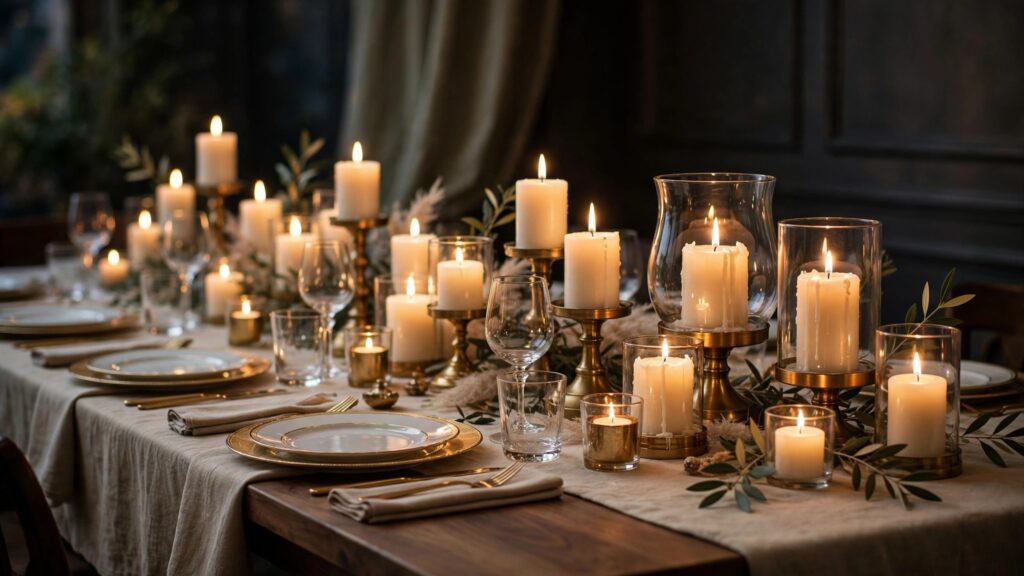
The most luxurious light of all is still the oldest: flame. Clusters of candles and hurricane lanterns on the dining table, the bath edge, or the coffee table give the evening a flicker that no bulb can fully copy.
How to do it: Group candles in odd numbers at varying heights using holders in brass, glass, or marble. For everyday ease, use high-quality flameless candles with realistic flicker in the same holders. They are safer around pets and curtains.
What to avoid: Scented candles everywhere. Strong competing fragrances make a home feel like a shop, not a sanctuary. Keep fragrance to one room and let the rest of the glow stay quiet.
11. Light Inside Shelves and Cabinets
Lit shelving turns ordinary storage into a display. Small LED pucks or strips inside bookshelves, china cabinets, and open kitchen shelving make glassware sparkle and books look curated.
How to do it: Stick warm LED puck lights to the underside of each shelf, aimed at the items below. In kitchens, under-cabinet strips also double as task lighting for the counter, a trick highlighted in our luxury kitchen decor ideas post.
What to avoid: Cool white pucks inside dark cabinets, which make the contents look like a convenience store. Warm light only inside display shelving.
12. Frame the Windows with Dusk Glow
Designers plan for the view after dark. String lights on the patio, landscape lighting on trees, and a few glowing lanterns outside the windows turn the evening view into living art and add depth the interior lighting can play off.
How to do it: Add solar or low-voltage path lights along the garden edge, and hang a weatherproof lantern or string lights over the patio. From inside, layered drapes in a warm fabric keep the window frame soft against the glow.
What to avoid: Bright white security floodlights pointed at the patio. Harsh blue-white outdoor light kills the warm interior mood instantly. Choose warm 2700K outdoor bulbs to match the inside.
Frequently Asked Questions About Luxury Lighting Design Ideas
What color temperature looks most luxurious?
Warm white around 2700K. It flatters wood, fabric, and skin tones, and it is the standard in hotels, restaurants, and high-end homes. Keep it consistent across the whole home.
How many light sources should a room have?
At least three per main room, at different heights: an overhead or ambient source, a task source like a table or floor lamp, and an accent source like a picture light or candle cluster. More layers mean more luxury.
Are LED lights okay for a luxury look?
Absolutely. Modern warm-white LEDs match the glow of old incandescents while running cooler and lasting years. The key is choosing 2700K, dimmable bulbs from a reputable brand so the dimming stays smooth.
What is the biggest lighting mistake people make?
Using a single bright overhead light per room, usually in daylight color temperature. It creates harsh shadows and flat walls. Almost any room improves instantly with layered sources, warm bulbs, and a dimmer.
Can lighting really make a small room look expensive?
Yes, and small rooms respond fastest. Wall sconces and cove lighting add glow without taking floor space, and layered warm light distracts from the room’s size entirely.
Sources
- HGTV — lighting and design guides
- Architectural Digest — designer lighting trends and room tours
- Lumens — lighting 101 guides on layering, color temperature, and fixture sizing