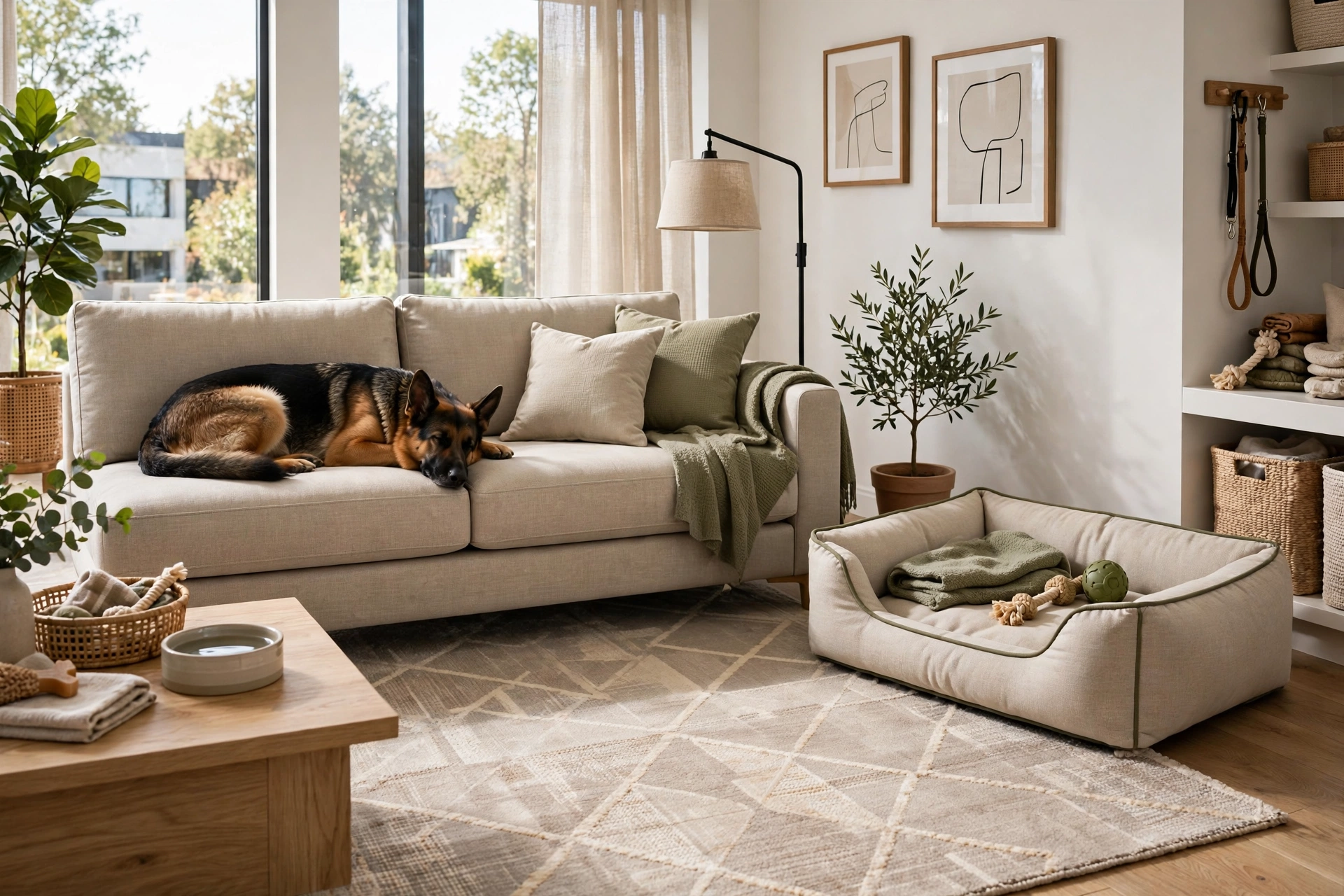
A beautiful living room and a dog who actually lives in it are not opposites. The mistake most people make is buying “pet furniture” that screams compromise — plastic covers, sad beige everything, a dog bed shoved in the corner like an apology.
The better approach: choose grown-up pieces that happen to survive paws, fur, and the occasional muddy entrance. Every idea below works in a real living room first and stands up to a real dog second.
1. Buy a sofa in performance fabric
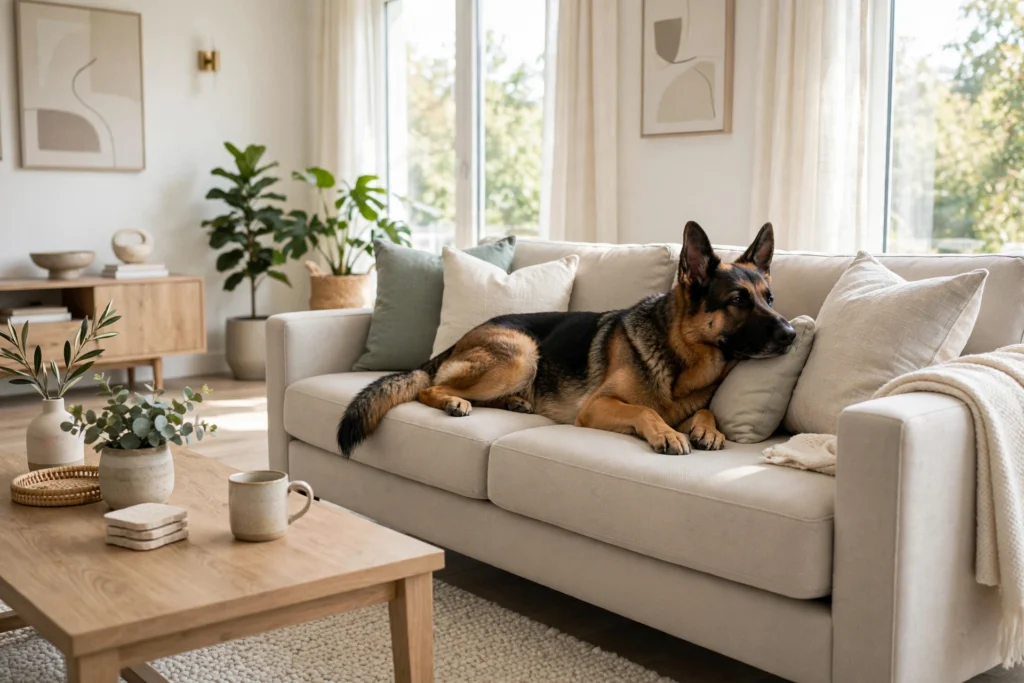
This is the single highest-impact choice. Performance fabrics — solution-dyed acrylic, olefin, and branded stain-resistant weaves — are engineered so spills bead up instead of soaking in, and pet hair lifts off with a lint roller instead of weaving itself into the fibers.
What to look for:
- A rub count (Wyzenbeek) of 30,000+ double rubs. This measures abrasion resistance. Standard residential sofas often rate 15,000–25,000; pet homes should go higher.
- Removable, machine-washable cushion covers. Zippers on every cushion, not just the back pillows.
- Tight weaves over loose ones. Loose weaves snag on nails; a tight plain weave or microfiber-style finish holds up far better.
Dark charcoal, warm greige, and mid-tone olive hide fur between cleanings without making the room feel heavy.
2. Use a washable slipcover as a second skin
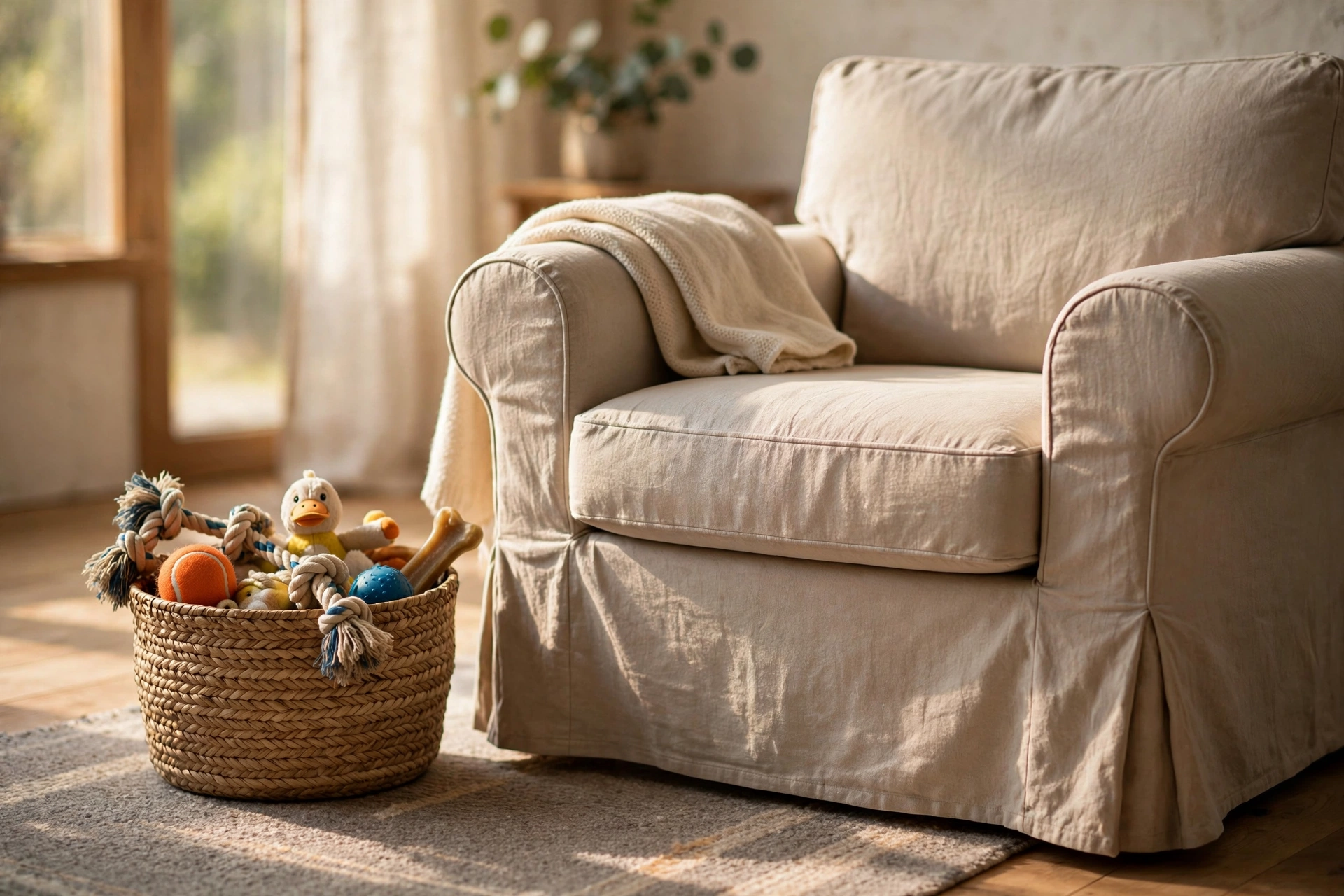
If replacing the sofa is not in the budget, a well-fitted slipcover does 80% of the same job. The key word is well-fitted — a baggy throw-over looks sloppy and slides off the moment a dog launches onto the couch.
Look for slipcovers with elasticized bottoms, separate cushion covers, and fabric rated machine-washable in cold water. Buy two sets: one on the sofa, one in the wash. Rotating them means the couch never has to sit bare while laundry runs.
3. Pick upholstery colors that work with your dog, not against them
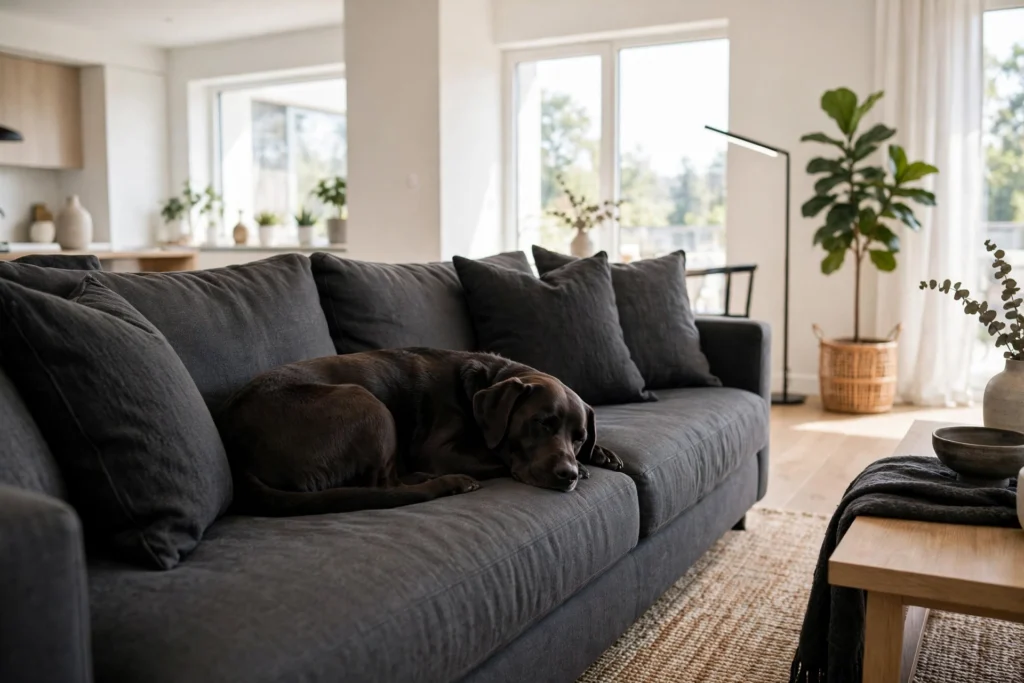
This is not about resigning yourself to brown. It is about contrast management:
- Light-colored dog? Choose warm whites, oatmeal, and light greige — fur becomes nearly invisible.
- Dark-colored dog? Charcoal, espresso, navy, and forest green do the same job.
- Patterned fabrics (small geometrics, subtle herringbone, textured bouclé-look weaves in performance fibers) break up the visual outline of stray fur better than any solid color.
Match the sofa to the dog and you will vacuum half as often. For broader palette inspiration, browse these living room color schemes that pair beautifully with pet-friendly fabrics.
4. Consider leather — real, full-grain leather
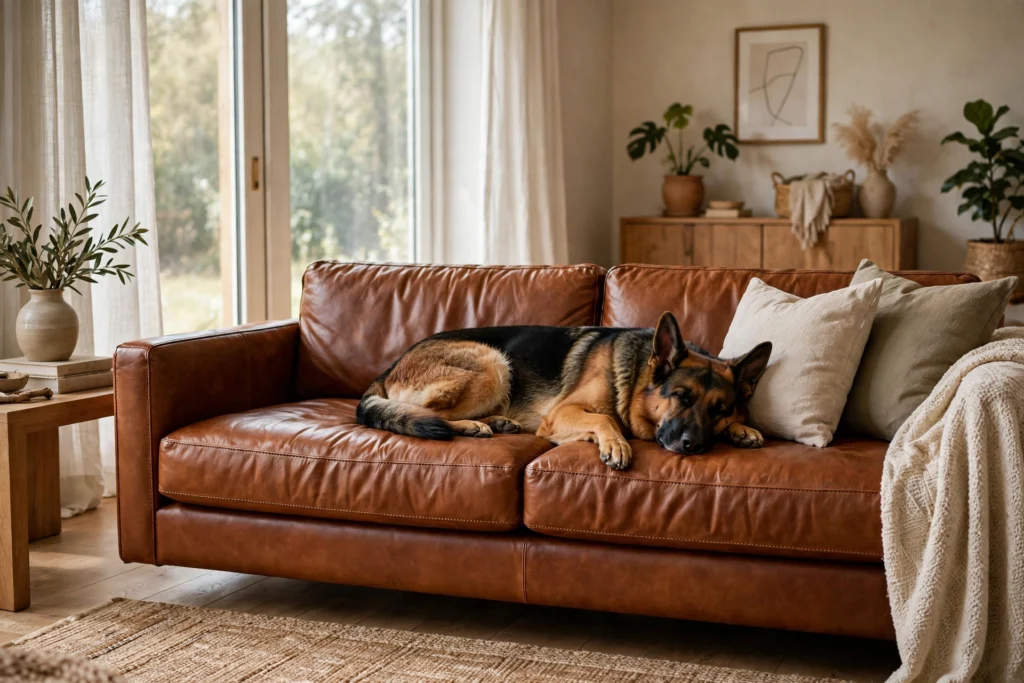
Leather has a reputation as precious, but full-grain or top-grain leather is one of the most dog-tolerant upholstery choices available. Muddy paw prints wipe off with a damp cloth, fur does not embed, and odors do not soak in the way they do with fabric.
Be honest about the trade-offs: nails will leave light scratches. On full-grain leather these buff out or blend into a patina that many people find attractive; on cheap bonded leather they flake and look terrible within a year. If you go leather, go quality — and keep the dog’s nails trimmed.
5. Anchor the room with a washable rug
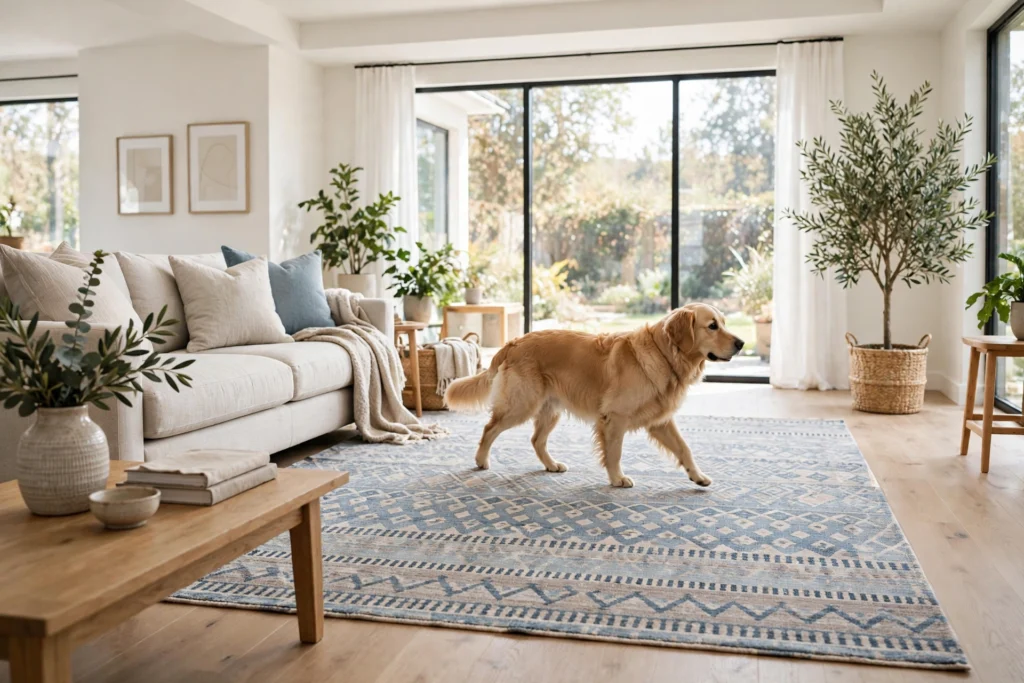
A living room rug takes the worst of dog life: muddy paws at the door path, drool near the water bowl, the occasional accident. A machine-washable rug turns a crisis into a laundry cycle.
Low-pile washable rugs (under 0.5 inch) work best — they lie flat under doors, do not trap fur deep in the fibers, and actually fit in a home washing machine up to about 5×7 feet. For larger sizes, look for two-piece systems where a thin top layer zips off a non-slip pad for washing.
Pair patterns with purpose: vintage-style or Persian-look patterns in muted tones hide both fur and faint stains between washes far better than solid light colors.
6. Give the dog furniture-grade bedding
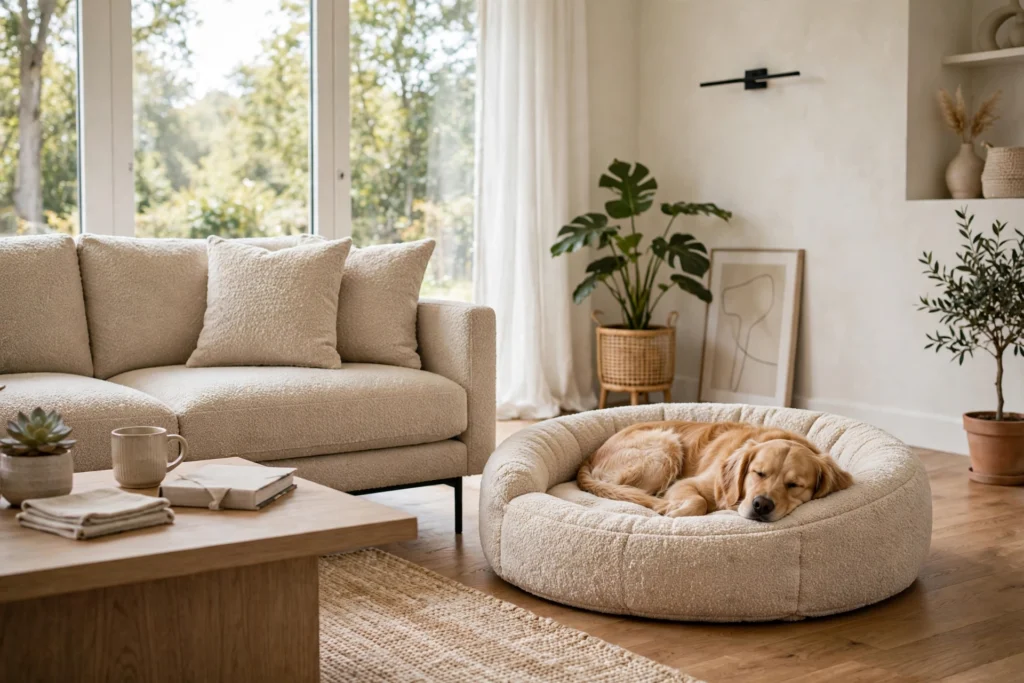
A lumpy old blanket in the corner tells your dog the living room is not really theirs — so they claim the sofa instead. A proper dog bed with a bolster, in a fabric that coordinates with your upholstery, reads as intentional decor and gives the dog a better option than your cushions.
Place it where the family actually sits, not exiled to a hallway. Dogs want proximity; a bed six feet from the sofa gets used, one in another room does not. Choose a bed with a removable, washable cover — non-negotiable with any dog that goes outside. If your puppy is still learning the house rules, here is how to stop a German Shepherd puppy from biting and chewing what it should not.
7. Drape washable throws over the “dog zones”
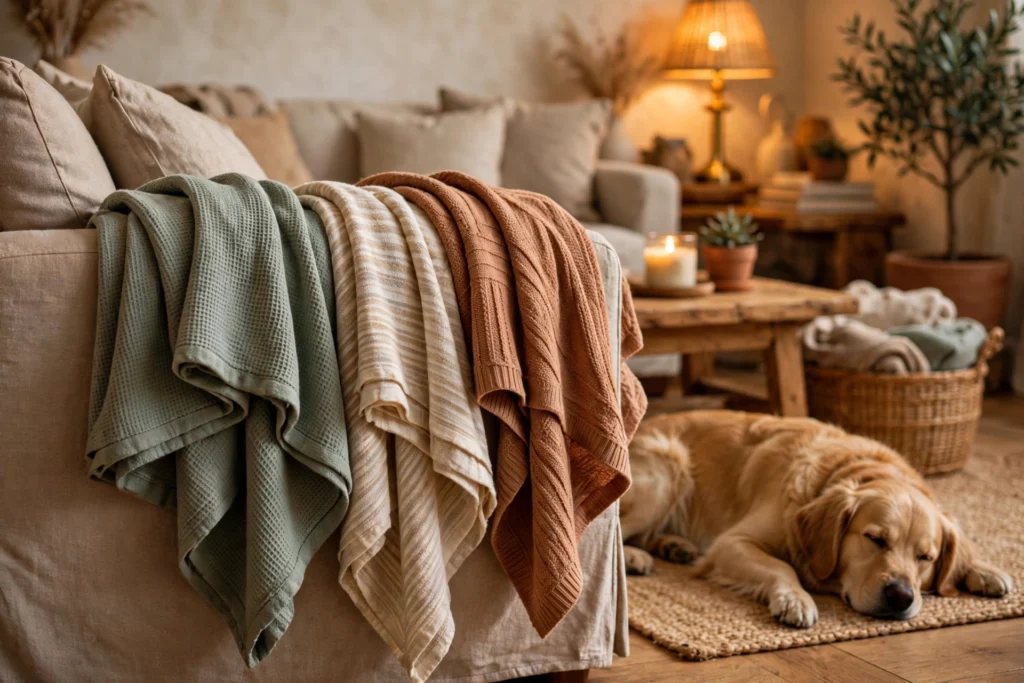
Even with a performance-fabric sofa, the armrest where the dog leans and the cushion where they nap will wear faster. A couple of attractive throw blankets — folded over the arm, draped on one seat cushion — take that beating instead.
This is sacrificial decor in the best sense: the throws are easy to toss in the wash weekly, they add texture and color to the room, and replacing a $40 throw every year or two beats reupholstering a sofa. Stick to machine-washable cotton, washable wool blends, or performance-fabric throws.
8. Swap the sharp-edged coffee table for an ottoman

A glass or sharp-cornered wood coffee table at tail height is a hazard — for wagging tails, for water glasses, and for a dog that cuts corners at speed. A large upholstered ottoman solves all three problems at once.
It has no sharp edges, it doubles as extra seating, and many come with hidden storage inside for toys and chews. Choose one in a wipeable material (performance fabric or leather) and it becomes the hardest-working piece in the room. Add a tray on top and it functions as a table when you need one.
9. Hide the dog gear in closed storage
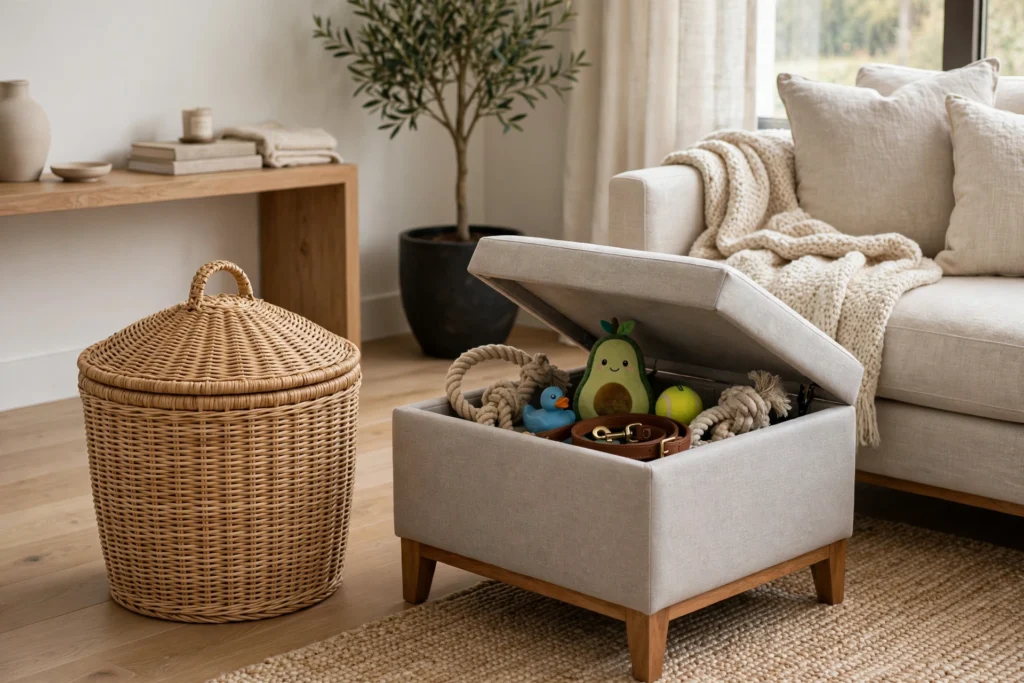
Nothing ruins a styled living room faster than visual clutter: a pile of toys in the corner, a bag of treats on the side table, a leash draped over a chair. The fix is not fewer dog things — it is closed storage.
A lidded basket, a storage ottoman, or one cabinet shelf dedicated to the dog keeps everything accessible and invisible. Keep a small lidded container near the door for the leash, waste bags, and a towel for muddy paws — the “muddy entry kit” that saves your rug daily.
10. Choose pet gates and dividers that look like furniture
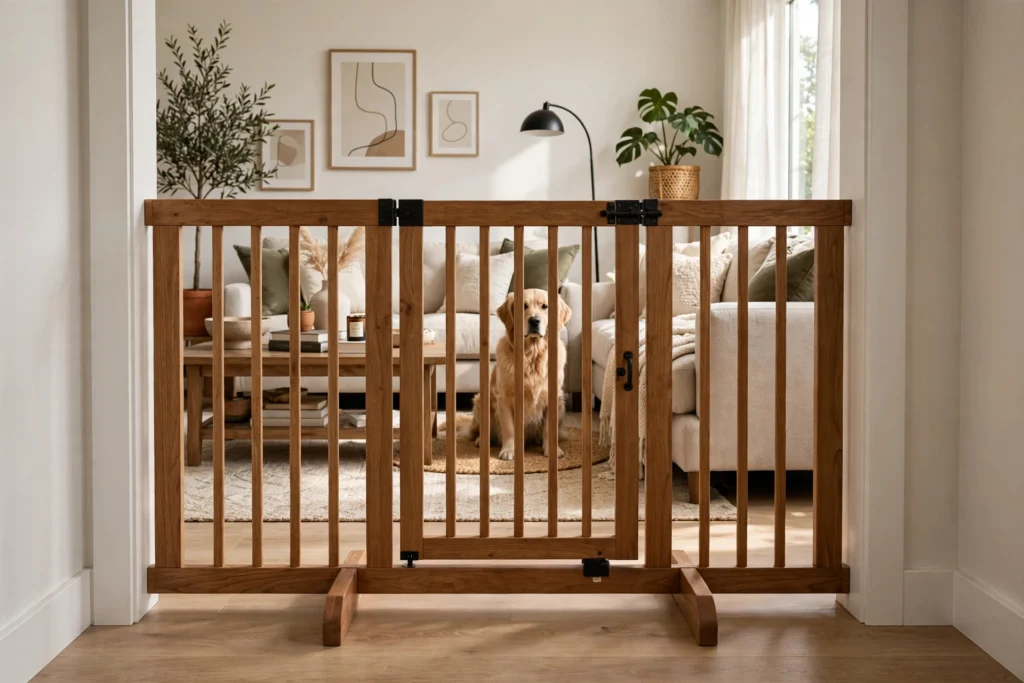
If you need to keep the dog out of part of the room, a pressure-mounted white metal gate screams “temporary.” Freestanding wooden pet gates and decorative room dividers do the same job while looking like something you chose on purpose.
Look for hardwood freestanding gates with a walk-through door — no wall damage, no tripping over a threshold bar. For open-plan spaces, a folding rattan or wood screen can block a hallway while adding texture to the room.
11. Rethink window treatments
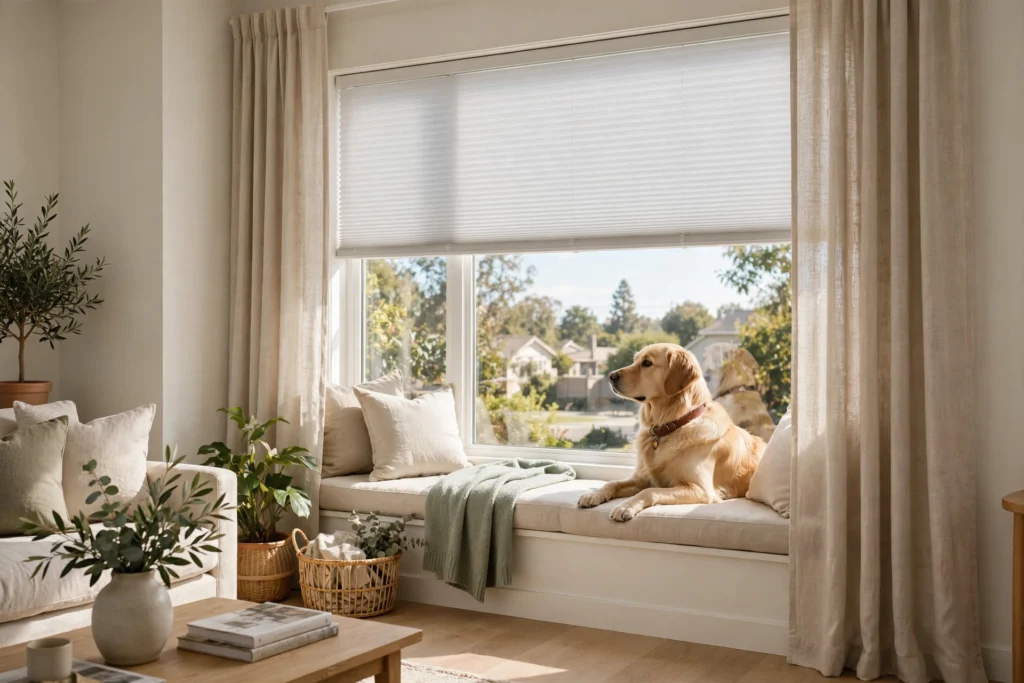
Dogs patrol windows. Curtains at nose height collect nose-print art and get snagged by claws; cords on blinds are both a chewing hazard and a safety risk.
Better options:
- Curtains hung to sill length rather than pooling on the floor behind the sofa.
- Washable curtain fabrics — cotton or linen blends you can launder when the nose prints accumulate.
- Cordless blinds or shutters, which remove both the chew temptation and the strangulation hazard for good.
If your dog is a dedicated window watcher, leave one window with a clear sill and put a washable runner beneath it. Fighting the behavior never works; designing around it does.
12. Manage odor at the source, not with plug-ins
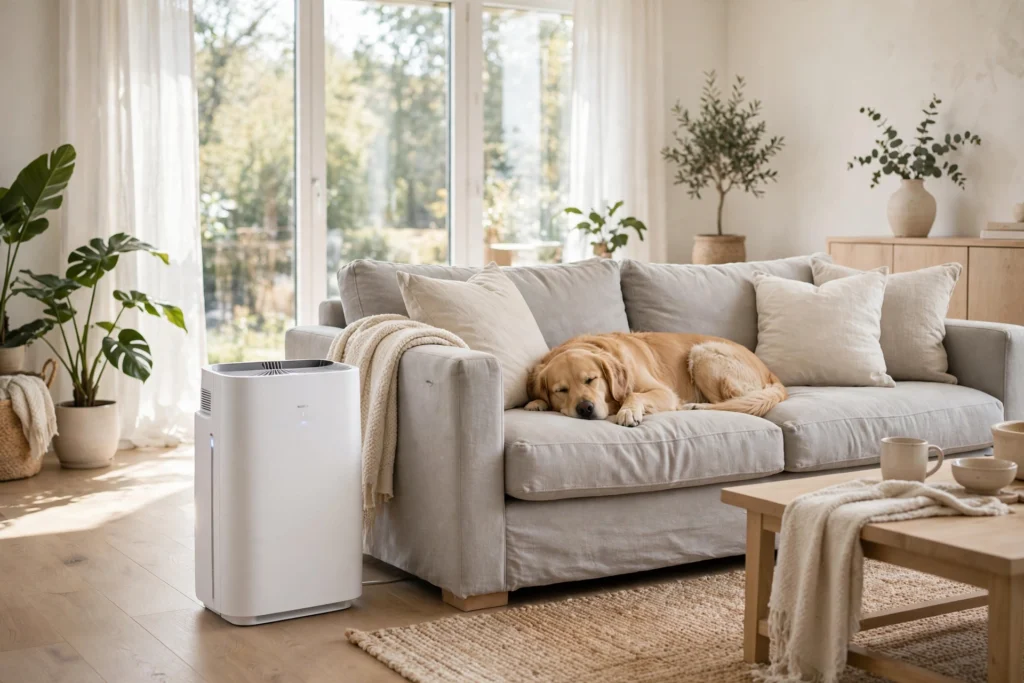
A dog home smells like a dog home when soft furnishings absorb odor faster than you remove it. Air fresheners mask; the real fixes are structural:
- Washable cushion and pillow covers, laundered on a rotation.
- An air purifier with a HEPA filter sized for the room — it genuinely reduces dander and the dusty smell it carries.
- Enzyme-based cleaners for any accident, used immediately. Regular cleaners remove the stain; enzyme cleaners break down the odor compounds so the dog does not return to the same spot.
- Hard-surface floors where practical. If you have wall-to-wall carpet and a dog, a washable area rug layered over it protects the carpet underneath and is far easier to deep-clean.
What to avoid in a dog-friendly living room
Some popular decor choices are simply incompatible with dogs, no matter how careful you are:
- White or cream bouclé and silk upholstery. Beautiful for exactly one week.
- Glass-top coffee tables at tail height. One enthusiastic wag away from disaster.
- Loose-weave or looped fabrics. Nails catch loops and pull runs across the fabric.
- Small decorative objects at tail level. If it can be swept off a low shelf by a tail, it will be.
- Toxic houseplants. Lilies, sago palm, and pothos are common living-room plants that are toxic to dogs. Check the ASPCA’s toxic plant database before bringing any plant home.
- Jute and sisal rugs in high-traffic dog paths. They look great but absorb moisture and odor, and they are nearly impossible to deep-clean after an accident.
FAQs
Will a dog ruin a leather sofa?
A quality full-grain or top-grain leather sofa handles dogs better than most fabrics — fur wipes off, spills do not soak in, and odors do not embed. Expect light surface scratches from nails, which typically blend into the leather’s patina. Cheap bonded or faux leather is the real risk: it peels and flakes under claws within months.
How do I keep my couch from smelling like dog?
Wash removable covers regularly, vacuum crevices weekly with an upholstery attachment, and run a HEPA air purifier in the room. For embedded odor, sprinkle baking soda over the upholstery, leave it 15–20 minutes, and vacuum thoroughly. Enzyme-based cleaners handle accident spots; standard cleaners only mask them.
What is the best rug color to hide dog hair?
Match the rug to your dog: light oatmeal, cream, or greige for light-colored dogs; charcoal, espresso, or navy for dark dogs. Patterned rugs — vintage, Persian-style, or small geometrics in muted tones — hide fur and faint stains better than any solid color.
How do I protect furniture from dog nails?
Keep nails trimmed on a regular schedule — this matters more than any product. Add washable throws to the dog’s favorite spots, choose tight-weave or leather upholstery that resists snagging, and place a washable runner along the dog’s main path through the room to reduce scratching on hard floors.
Are slipcovers worth it for dog owners?
Yes, if you buy fitted ones with elasticized bases and separate cushion covers. They protect the upholstery underneath, go straight in the washing machine, and buying two sets means the sofa is never left bare. Baggy universal-fit covers slide around and look messy — fit is everything.
Sources
- Carpet and Rug Institute — guidance on rug construction and cleaning: https://carpet-rug.org/
- ASPCA Toxic and Non-Toxic Plants database: https://www.aspca.org/pet-care/animal-poison-control/toxic-and-non-toxic-plants
- American Kennel Club — dog care and home setup advice: https://www.akc.org/expert-advice/