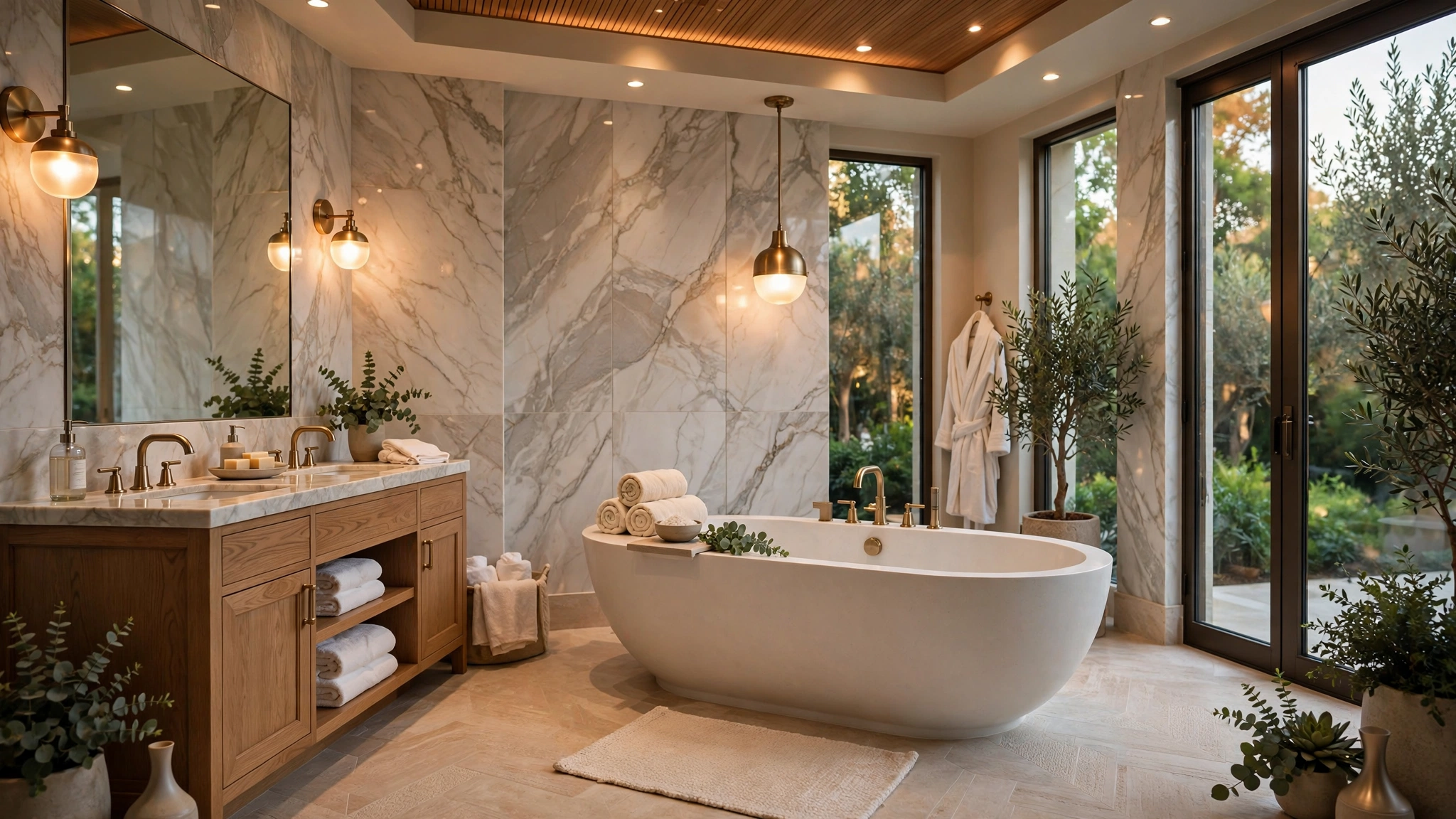
The most convincing luxury bathroom decor starts with restraint. A calm palette, honest materials, and a few well-chosen fixtures will always read as more expensive than a room crowded with trends. Whether you are planning a full renovation or a weekend refresh, the goal is the same: a bathroom that feels composed, warm, and easy to live in every single day.
This guide walks through the decisions that give a bathroom its polished character, from layout and lighting to towels and trays. Each section explains how to do it well and what to avoid, so you can spend where it matters and save where it does not show.
There is no single product that makes a bathroom feel luxurious. The effect comes from a chain of small, consistent decisions: one palette, one metal finish, materials that feel good to touch, and surfaces kept calm and clear. The good news is that most of these decisions are available at every budget. Paint, textiles, lighting, and hardware can transform a builder-grade bathroom long before a renovation is on the table. Work through the sections in order, and the room will come together as one composed space rather than a collection of separate purchases.
1. Start With a Calm, Layered Color Palette
How to do it: Build the room around two or three tones. Warm white, soft stone, and one metal finish is a reliable foundation. Add depth with a slightly darker vanity, a textured tile, or a muted accent color in towels and accessories. Repeating the same tones across walls, floors, and textiles is what makes the space feel intentional rather than assembled by accident.
What to avoid: Mixing four or five competing colors in a small bathroom. Bold contrast everywhere creates visual noise, and noise is the opposite of luxury. If you love color, use it once, in a place you can change easily.
2. Choose Materials That Age Gracefully
How to do it: Natural stone, porcelain that mimics stone, solid wood vanities, and unlacquered or brushed metal finishes all develop character over time. Large-format tiles with fewer grout lines give walls a quieter, more architectural feel. Where budget matters, spend on the surfaces you touch daily: the countertop, the shower floor, and the faucet handles.
What to avoid: Shiny, plasticky finishes and imitation materials that try too hard. A matte porcelain tile will look refined for years, while a high-gloss printed pattern can date a room quickly.
3. Make the Vanity the Anchor
How to do it: The vanity is the furniture piece of the bathroom, so treat it like furniture. A floating vanity opens up floor space and makes a small room feel larger. Furniture-style legs, a stone top, and undermount sinks keep the look tailored. Keep the countertop nearly clear; a tray for daily essentials is enough.
What to avoid: A vanity that fights the room’s scale. Oversized cabinets in a small bathroom crowd the space, and a countertop covered in bottles undoes even the most beautiful cabinetry.
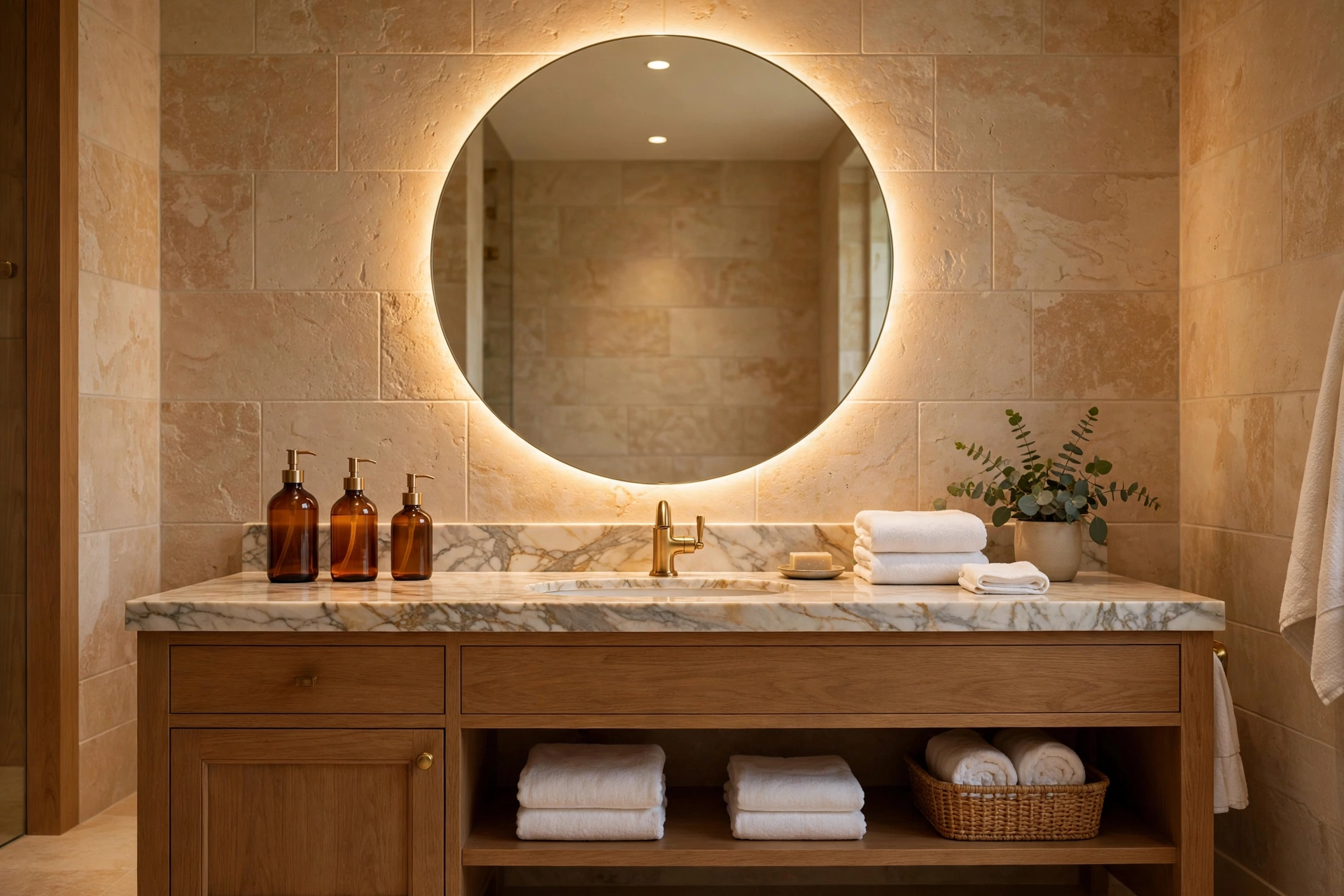
4. Treat the Mirror as a Design Feature
How to do it: A generously sized mirror with a slim metal frame or soft backlighting does more for a bathroom than almost any accessory. Round and arched shapes soften a room full of hard surfaces. Backlit mirrors also provide even, flattering light for grooming without harsh shadows.
What to avoid: Tiny mirrors with heavy ornate frames. They shrink the room visually and collect dust in every carved detail. One large, simple mirror almost always looks more expensive than two small decorative ones.
5. Layer the Lighting Like a Hotel
How to do it: Plan three layers: ambient light from the ceiling, task light at the mirror, and a soft accent such as a wall sconce or LED strip under the vanity. Warm white bulbs around 2700 to 3000 Kelvin flatter skin tones and stone. Put lights on dimmers so the room can shift from bright morning routine to calm evening bath.
What to avoid: A single overhead fixture as the only light source. It casts shadows on faces and makes even beautiful materials look flat and cold.
6. Upgrade Fixtures in One Consistent Finish
How to do it: Faucets, shower controls, towel bars, and the toilet paper holder should share one finish. Brushed brass, brushed nickel, and matte black are all durable choices. Consistency is the trick: a matching set reads as a deliberate design decision, and it is one of the most affordable ways to lift a bathroom.
What to avoid: Mixing chrome, brass, and black in the same room without a plan. One mismatched fixture is noticeable; four different finishes make the room feel unfinished.
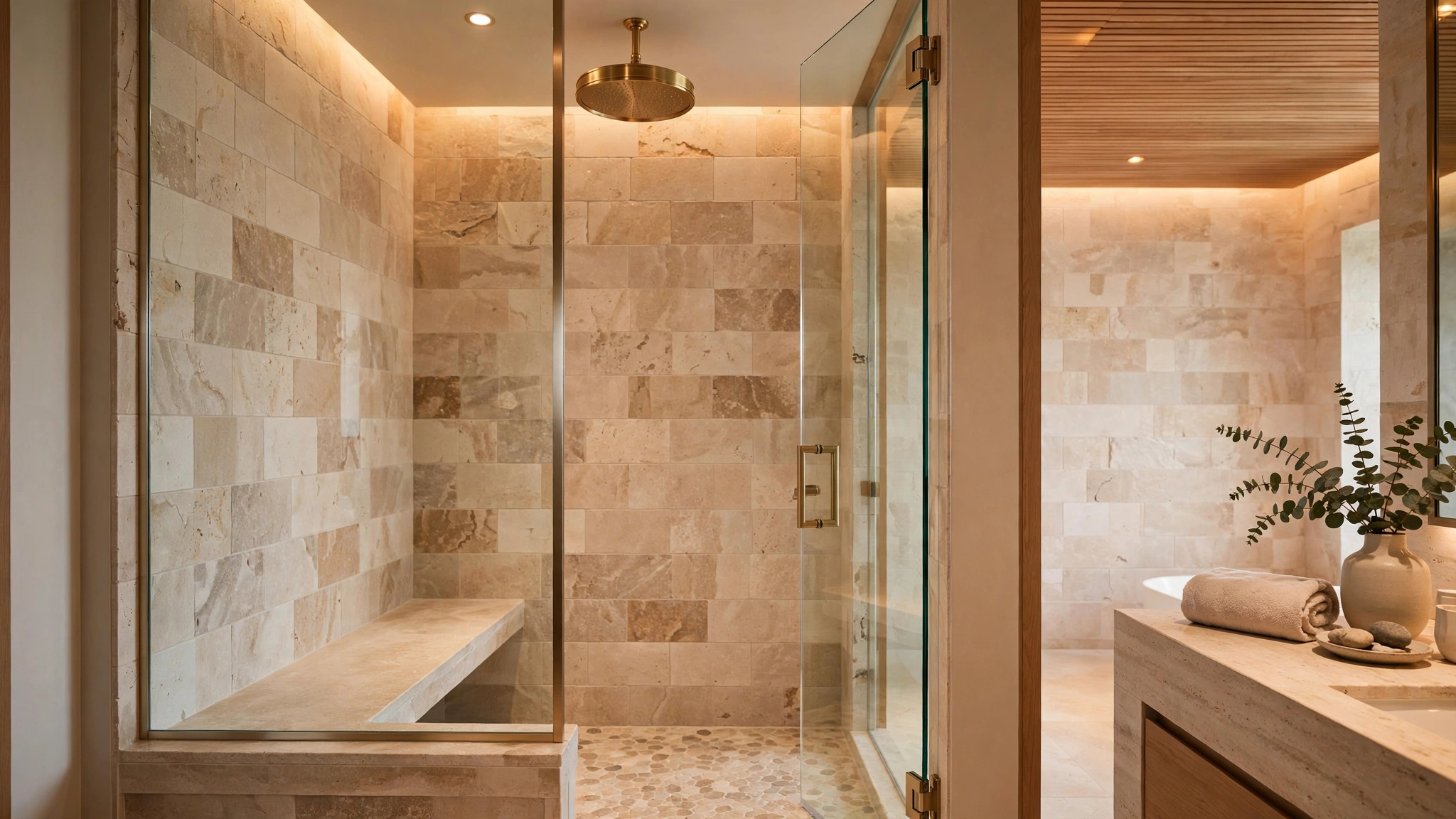
7. Design the Shower as a Spa Moment
How to do it: A frameless glass panel, a rainfall showerhead paired with a handheld, and a built-in bench or niche create a genuinely restful shower. Continue the wall tile onto the shower floor with a smaller format for grip, or use a linear drain for a clean, uninterrupted surface.
What to avoid: A bulky framed enclosure with visible tracks and a curtain over a standard tub-shower combo when a renovation is possible. The enclosure is a large visual element; keeping it minimal changes the whole room.
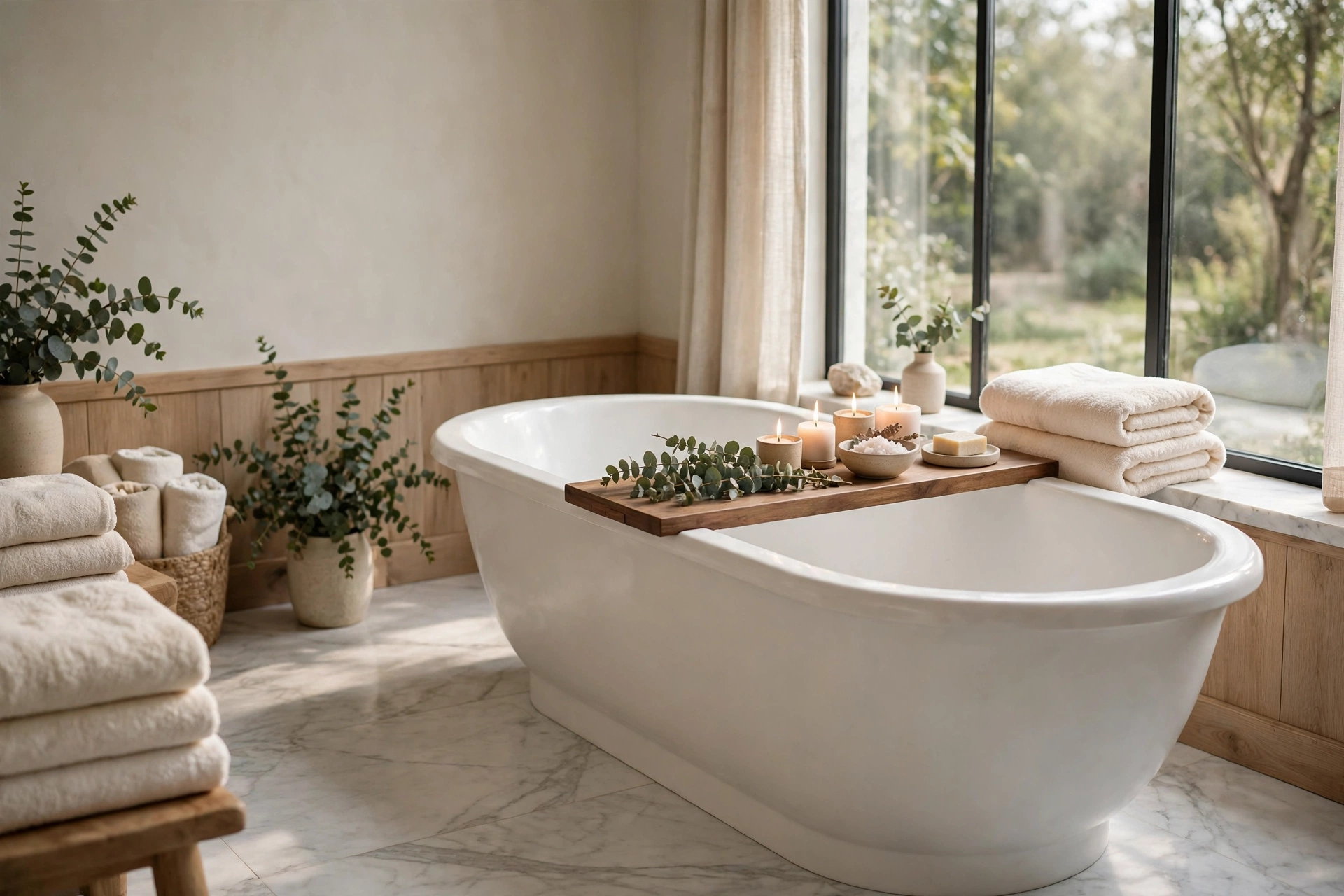
8. Give the Bathtub a Starring Role
How to do it: If space allows, a freestanding tub placed with breathing room around it becomes the room’s sculpture. Style it simply: a wooden or stone bath tray, one candle, and a neatly rolled towel. Even a standard alcove tub looks elevated with a fresh surround, a modern filler, and tiled walls carried to the ceiling.
What to avoid: Surrounding the tub with clutter. Bottles lined along the rim and plastic caddies cancel out the calm a beautiful tub is meant to create. Store products in the shower niche or a closed cabinet instead.
9. Use Textiles to Add Softness
How to do it: Thick, generously sized towels in white or a soft neutral instantly signal hotel quality. Fold or roll them the same way every time, and keep one set reserved for display if the bathroom is shared. A woven bath mat or a vintage-style runner adds warmth underfoot and softens echo in a tiled room.
What to avoid: Thin, mismatched towels in fading colors. Textiles are the most visible soft layer in the room, and worn towels make the whole space feel tired regardless of the fixtures.
10. Style Surfaces With a Light Hand
How to do it: Group a few beautiful, useful objects: a matching soap dispenser set, a small plant that tolerates humidity, a candle, and a tray to hold them together. Decanting products into uniform bottles is a small change with an outsized effect on how considered the room feels.
What to avoid: Decorative clutter with no function. Every object in a bathroom earns its place by being used or by being genuinely beautiful, preferably both. If you enjoy the calm styling approach used across the home, the same principles apply in our guide to luxury living room decor ideas.
11. Keep Storage Hidden and Counters Clear
How to do it: Closed storage is the quiet engine of a luxurious bathroom. Use drawer organizers inside the vanity, a mirrored cabinet for daily items, and baskets only for rolled towels or paper goods. When counters stay clear, the materials you invested in remain the focus.
What to avoid: Open shelving filled with everyday toiletries. A single styled shelf can work, but rows of half-used products read as storage, not decor.
12. Finish With Scent and Sound
How to do it: The final layer is sensory. A reed diffuser or a quality candle in a consistent scent, eucalyptus hung from the showerhead, and a small waterproof speaker for calm music complete the spa feeling. These touches cost little and are what guests remember.
What to avoid: Overpowering air fresheners and competing fragrances. One subtle, consistent scent feels refined; three strong ones feel like a cover-up.
Frequently Asked Questions
What colors make a bathroom look luxurious?
Warm whites, soft greys, stone tones, and deep accents such as charcoal or forest green all work well. The key is limiting the palette to two or three tones and repeating them across tiles, textiles, and accessories so the room feels calm and deliberate.
How can I make a small bathroom feel more luxurious?
Use a floating vanity, one large mirror, large-format tiles, and a frameless glass shower panel. Keep counters clear, choose one metal finish, and invest in thick white towels. Small rooms benefit most from restraint and consistency.
What is the most affordable luxury bathroom upgrade?
Matching fixtures and hardware in a single finish, followed by decanting toiletries into uniform dispensers and upgrading towels. Each is inexpensive, none requires renovation, and together they change how finished the room feels.
Are freestanding bathtubs practical?
Yes, provided there is enough space to clean around them and the floor is properly waterproofed. In tighter bathrooms, a deep alcove tub with walls tiled to the ceiling delivers a similar sense of calm without the footprint.
Which metal finish is most timeless for a luxury bathroom?
Brushed nickel and brushed brass have the longest track record. Both hide water spots better than polished finishes and pair well with stone and wood. Whichever you choose, repeat it consistently throughout the room.
Sources
- National Kitchen & Bath Association, Bathroom Design Guidance: https://nkba.org
- U.S. Department of Energy, Lighting Choices and Color Temperature: https://www.energy.gov