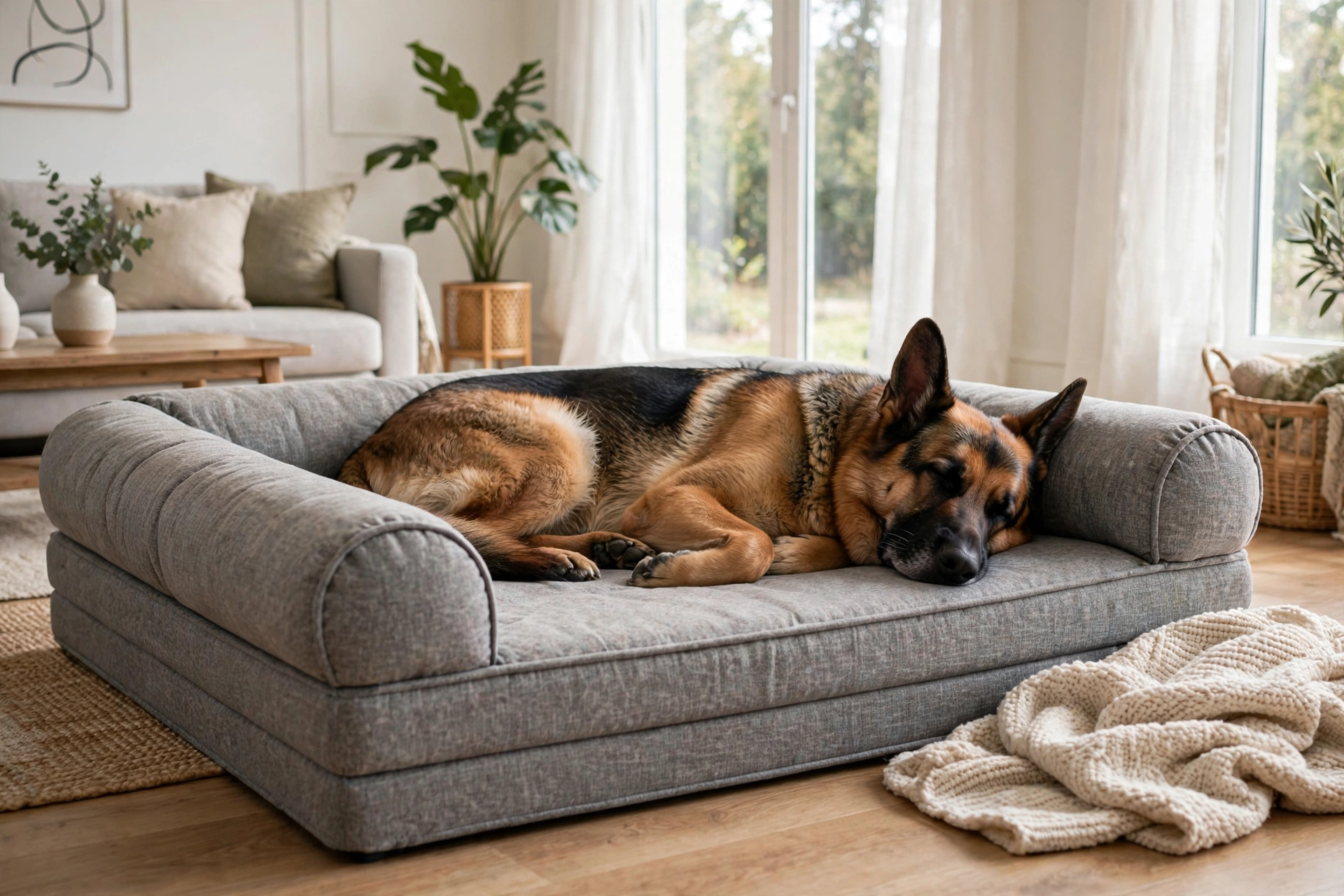
A large dog hits the floor harder than a small one — literally. If you are shopping for orthopedic dog beds for large dogs, the goal is simple: a bed that supports heavy joints, keeps its shape under real weight, and survives being washed. Regular fluffy beds flatten into pancakes under 80 pounds; a genuinely supportive bed distributes that weight instead of letting hips and elbows press through to the floor. It also pays to protect the floor around the bed — washable rugs make cleanup much easier when a big dog tracks in mud.
“Orthopedic” is not a regulated term in pet products, so marketing does a lot of heavy lifting. This guide sticks to what actually matters — foam type, thickness, washability, and fit — and walks through the 7 bed styles worth considering, with honest notes on who each one suits. That applies to any big breed, from a bouncy German Shepherd puppy to a grey-muzzled senior.
Orthopedic dog beds for large dogs: 7 styles worth considering
What to look for before you buy
A quick checklist that applies to every style below:
- A real support core. Look for high-density support foam topped with memory foam. Press your hand in hard: quality foam rebounds slowly and does not leave a lasting dent. If your fingers hit the floor through it in the store, walk away.
- Enough thickness for the dog’s weight. Rough guide below — but as a rule, denser foam matters more than raw thickness.
- A removable, machine-washable cover. Non-negotiable for any large dog. A waterproof liner between the cover and the foam is a major plus.
- The right footprint. The dog should be able to lie fully stretched out without hanging off the edge. Measure the dog sprawled, not curled.
- A non-slip bottom. Large dogs launch themselves onto beds; a bed that slides across hardwood is a joint injury waiting to happen.
1. Classic flat memory-foam beds
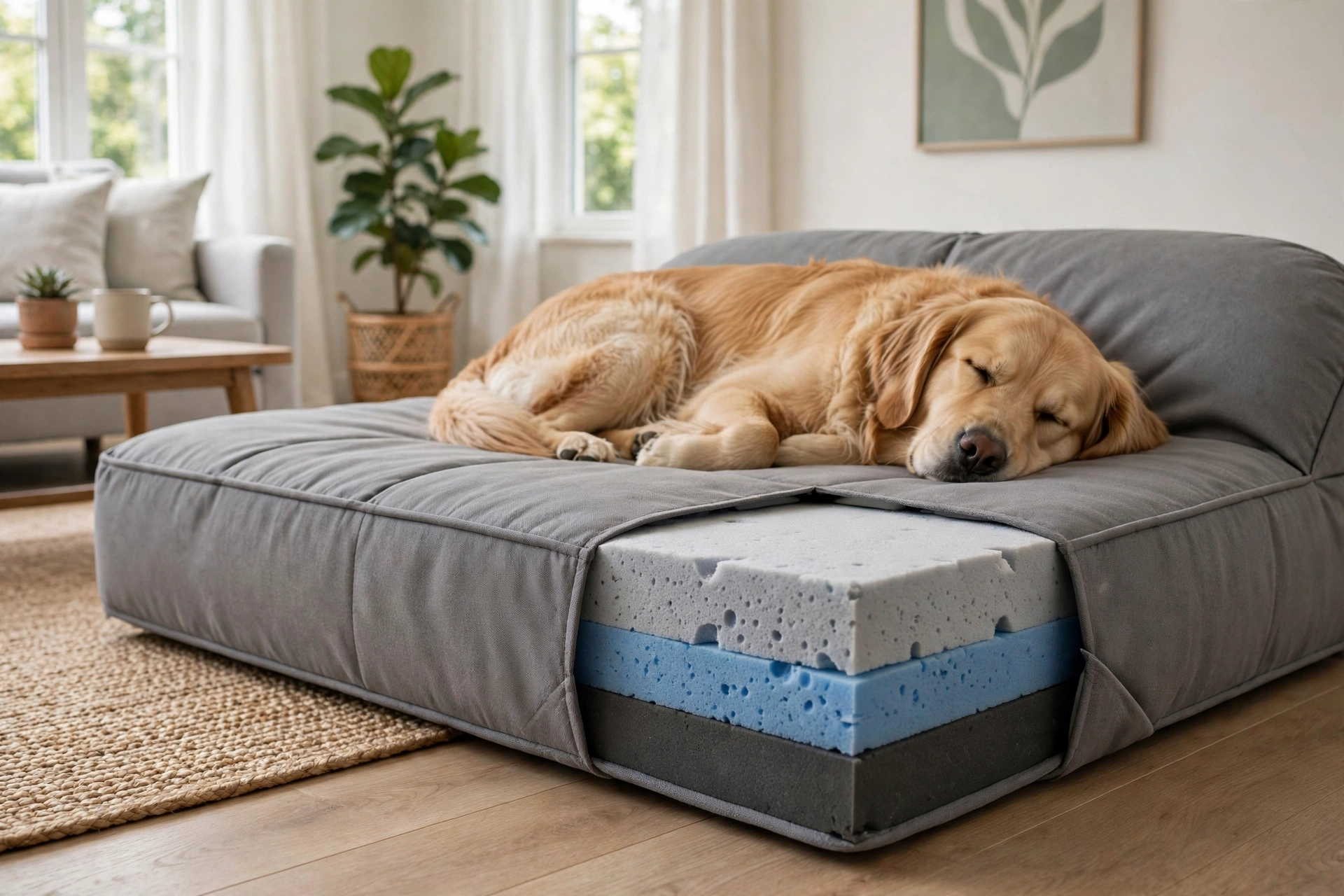
The baseline everything else is judged against: a rectangular slab of high-density base foam topped with a memory-foam layer, in a washable cover. No frills, and that is the point — every dollar goes into the sleeping surface.
Best for: Most large dogs, and anyone buying their first genuinely supportive bed.
Look for: A two-layer build (firm base + contouring top), with a cover that actually comes off for washing.
What to avoid: Slabs under 3 inches thick for heavy dogs, and anything labeled “orthopedic” that is filled with plain polyester fiberfill — that is a pillow, not support.
2. Bolster beds with an orthopedic base
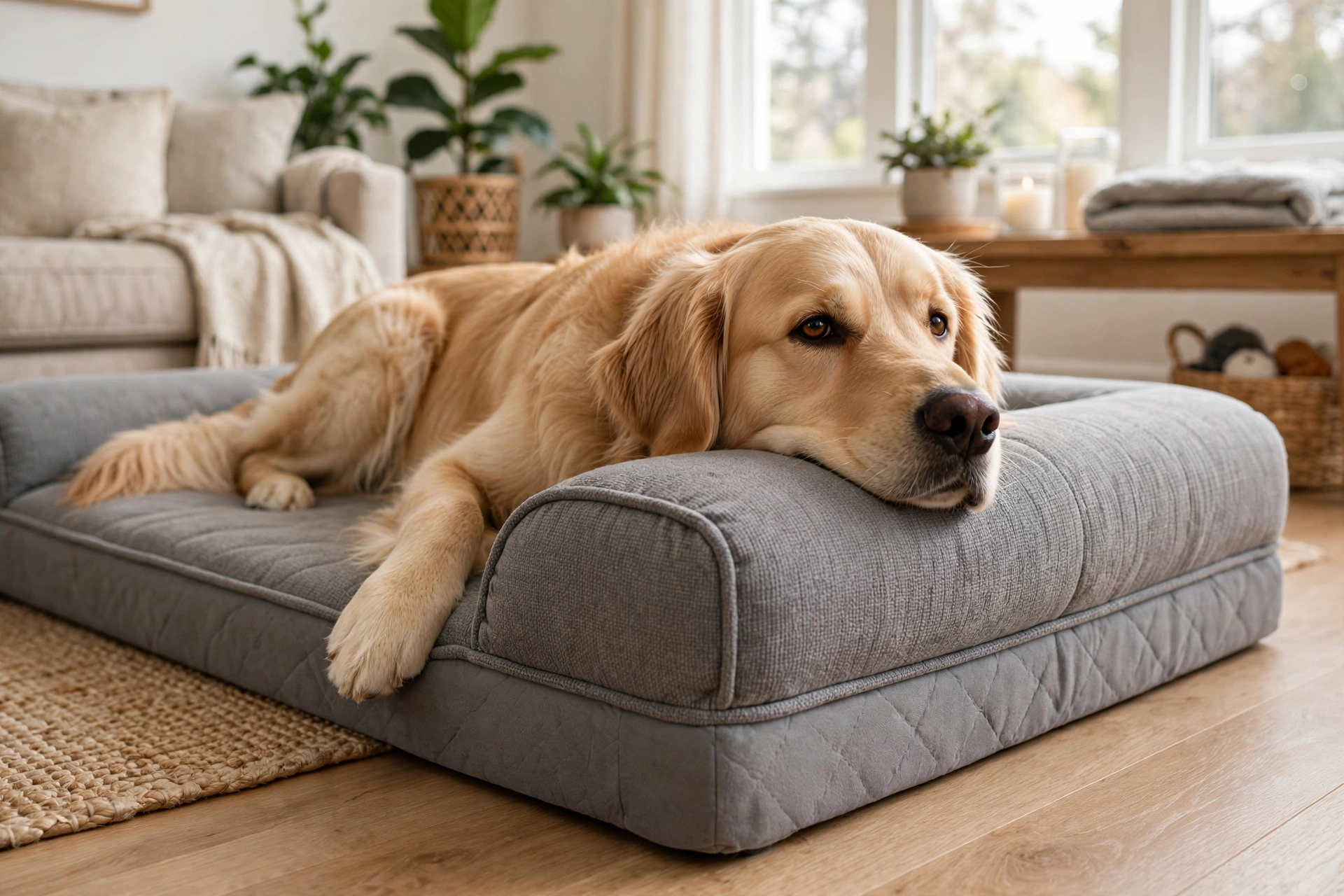
Raised padded edges around two or three sides, with a proper memory-foam sleeping surface in the middle. Dogs that rest their chin on things love these — the bolster works like a pillow.
Best for: Chin-resters, dogs that curl up, and anxious dogs that like the enclosed feeling.
Look for: Bolsters with real structure (not just loose stuffing) and a base as thick as a flat orthopedic bed — some bolster beds skimp on the middle.
What to avoid: Bolsters so tall the dog has to climb over them, which is hard on stiff seniors. Low, supportive rails beat tall, floppy walls.
3. Sofa-style beds with back and armrests
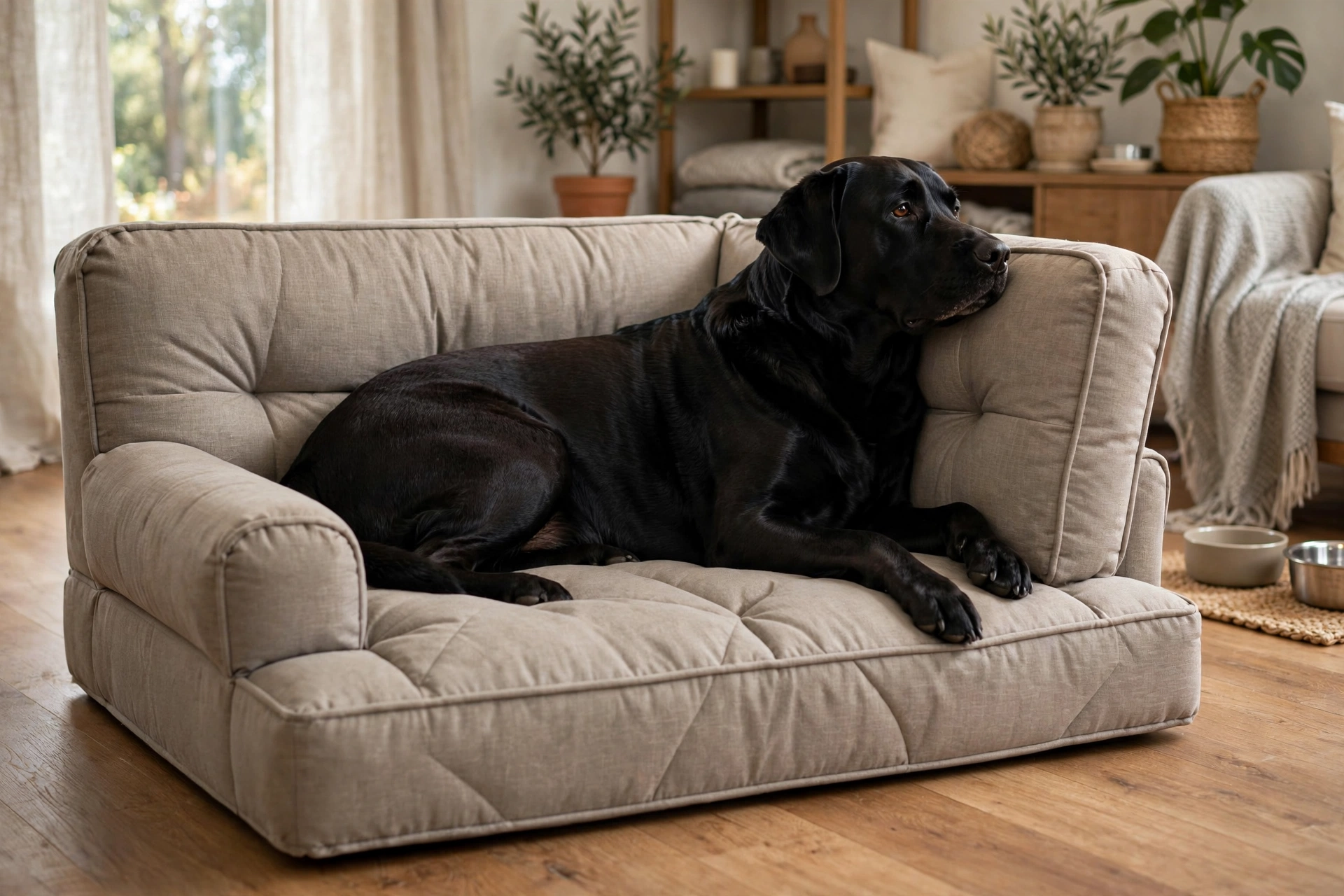
A step up from bolsters: a structured back and sides that mimic a tiny couch. Dogs that lean against furniture or people tend to claim these immediately. They also look right at home in a dog-friendly living room.
Best for: Leaners, seniors who like back support when shifting positions, and living rooms where the dog bed is on display.
Look for: A backrest with actual structure that does not collapse when leaned on, and the same foam quality in the seat as a flat bed.
What to avoid: Sofa beds where the “support” is all in the decorative back while the sleeping surface is thin. Flip it over and check the base thickness.
4. Waterproof orthopedic beds
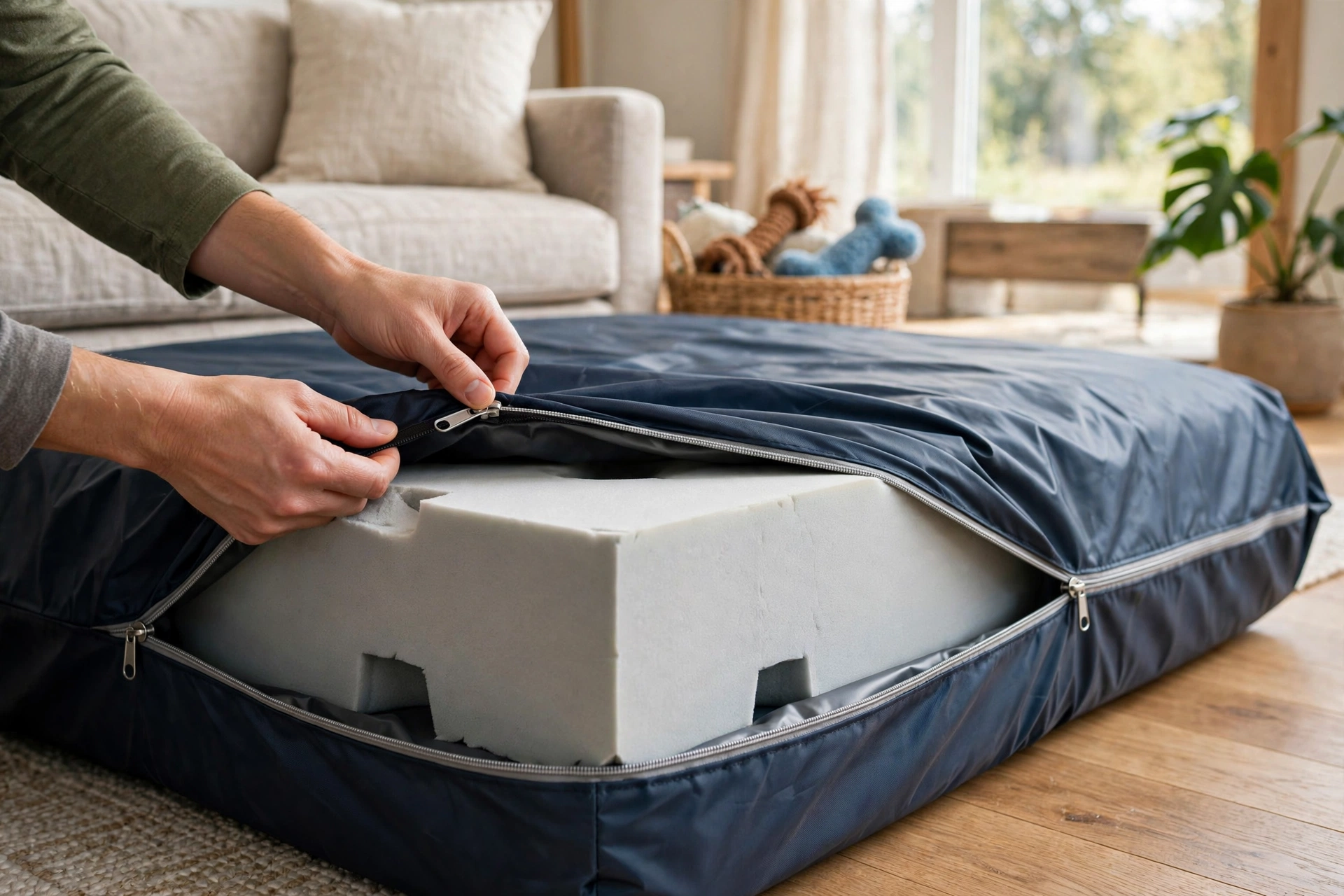
These add a waterproof liner between the washable cover and the foam, so accidents, drool, and wet-dog dampness never reach the foam core. Once foam gets soaked, it is nearly impossible to fully clean — the liner prevents that entirely.
Best for: Senior dogs, puppies still training, and any dog with occasional incontinence.
Look for: A separate waterproof liner (a zippered inner sleeve), not just a “water-resistant” cover — coatings wear off, liners do not.
What to avoid: Crinkly plastic-feeling liners that make noise every time the dog moves, and non-removable liners you cannot wash or replace.
5. Cooling orthopedic beds

Gel-infused memory foam or breathable open-cell foam paired with a moisture-wicking cover. They do not refrigerate the dog — they dissipate body heat faster than standard foam, which runs warm.
Best for: Warm climates, thick-coated breeds, and dogs that pant on regular foam beds in summer.
Look for: Breathable covers you can wash, and realistic claims — “temperature-regulating” is honest, “ice-cold” is not.
What to avoid: Thin beds riding on the cooling buzzword with no real foam underneath, and placing any bed in direct sun, which cancels out the cooling entirely.
6. Orthopedic crate pads

Thinner fitted pads — usually 2 to 3 inches of dense foam — cut to sit inside a crate. They turn the crate from a hard plastic tray into a genuinely comfortable den.
Best for: Crate setups, travel crates, and the back seat on road trips.
Look for: Exact-fit sizing for your crate model and dense foam that does not bunch up. A washable cover matters even more here, since crate pads see heavy use.
What to avoid: Pads so thick the crate door will not close or the dog cannot sit upright inside. And skip loose, oversized pads — bunched fabric under a heavy dog creates pressure points, defeating the purpose.
7. Budget egg-crate foam beds
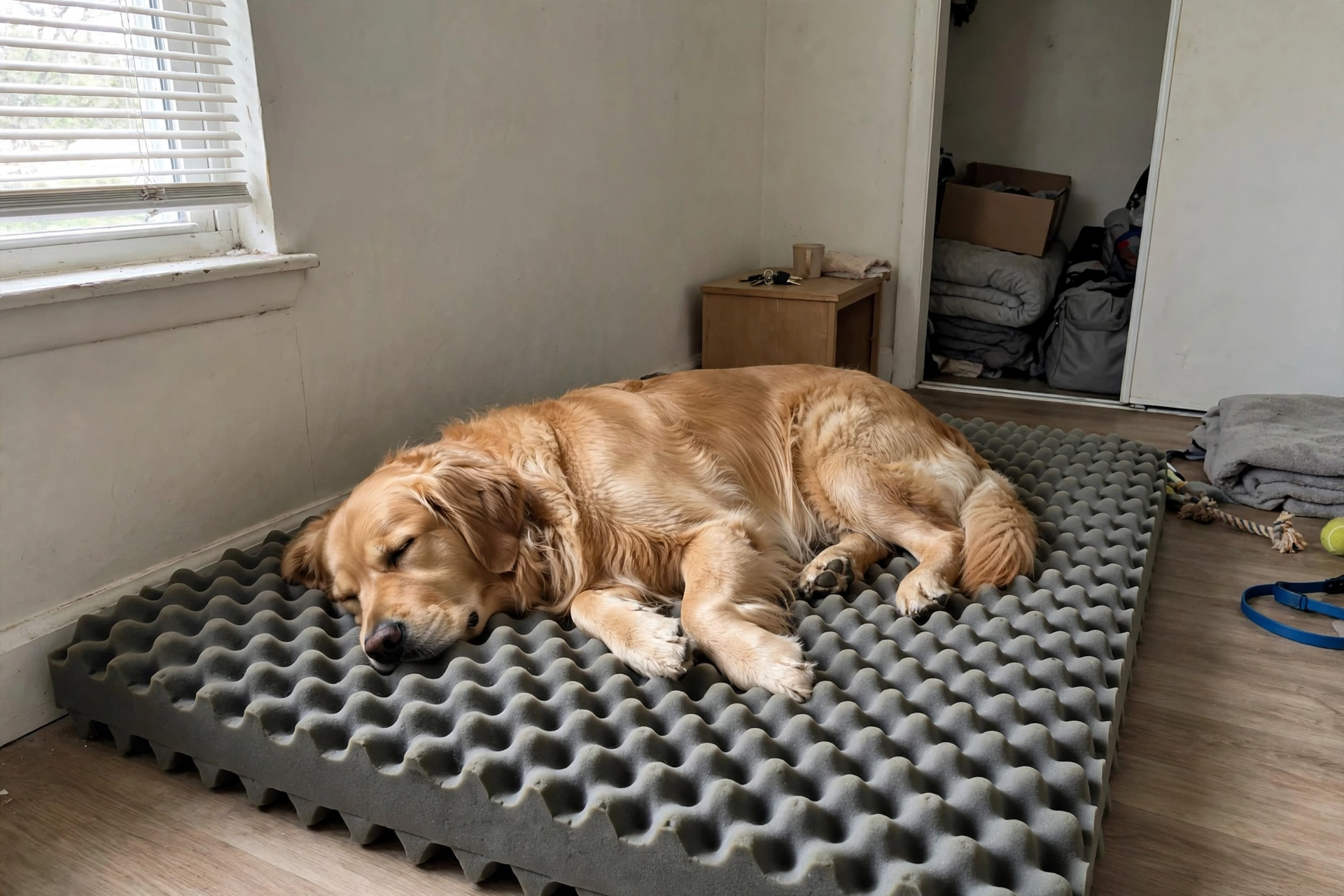
Convoluted “egg-crate” foam is cheaper to produce than solid memory foam, so these beds cost significantly less while still offering more support than fiberfill. A reasonable entry point.
Best for: Spare rooms, lighter large dogs, and testing whether your dog will actually use an orthopedic bed before investing.
Look for: High-density egg-crate foam — press it; it should push back firmly, not collapse.
What to avoid: Expecting it to last like solid memory foam. Low-density egg-crate bottoms out in weeks under a heavy dog. Treat it as a trial or secondary bed, not a decade purchase.
Thickness guide by dog weight
Thicker is not automatically better — a thin slab of dense foam outperforms a thick slab of soft foam. But as a rough starting guide:
- Under 50 lbs: 3–4 inches of quality foam is usually plenty.
- 50–90 lbs: Look for 4 inches or more, with a firm support base.
- Over 90 lbs: 5 inches and up; giant breeds do best with the thickest dense-core beds you can find.
The hand test beats any number on a label: press your full weight through your palm. If you feel the floor easily, the bed is too thin or too soft for a large dog, whatever the packaging claims.
What to avoid in orthopedic dog beds
- “Orthopedic” beds with fiberfill cores. Without a foam support layer, the word means nothing.
- Beds the dog cannot stretch out on. Measure the sprawl, not the curl — a too-small bed forces joints into cramped positions.
- Non-removable covers. A large-dog bed without a washable cover has a short, smelly life.
- Donut and cuddler beds marketed as orthopedic. Most have thin padded bases; the “support” is the fluffy rim, which does nothing for joints.
- Strong chemical smells out of the box. Air new foam beds out for a day or two before the dog uses them. Persistent harsh odors mean low-quality foam — return it.
- Buying for the human, not the dog. If the dog consistently chooses the hard floor over the expensive bed, the bed failed — regardless of what the label promised.
FAQs
Do large dogs really need orthopedic beds?
Need is a strong word, but physics favors them: more weight means more pressure on hips, elbows, and shoulders, especially on hard floors. Supportive bedding is widely recommended for senior large breeds and is simply more comfortable for any heavy dog. At minimum, every large dog deserves a bed it can stretch out on that does not bottom out.
Memory foam vs. egg-crate foam — which is better?
Solid memory foam over a high-density base is denser, more supportive, and lasts longer — it is the better primary bed. Egg-crate foam is lighter and cheaper, fine for secondary beds or lighter dogs, but it compresses faster under heavy weight. For a giant breed’s main bed, solid foam wins.
How thick should an orthopedic bed be for a 100-pound dog?
As a rough guide, 5 inches or more of dense foam. But test rather than trust the number: press your palm through with real force. If you feel the floor, it is not enough bed for a 100-pound dog, whatever the label says.
Can you wash an orthopedic dog bed?
The cover — yes, and it should come off easily for machine washing. The foam core itself should not go in the washer; spot-clean it and air it out. This is why a waterproof liner matters: it keeps the foam clean so you rarely need to deal with the core at all.
How do I know when to replace the bed?
When the foam no longer rebounds after the dog gets up, when you can feel the floor through it, or when the dog starts choosing the bare floor instead. Washable covers can be replaced separately — replace the whole bed when the support is gone.
Sources
- American Kennel Club — dog care and home setup advice
- ASPCA — general pet care resources