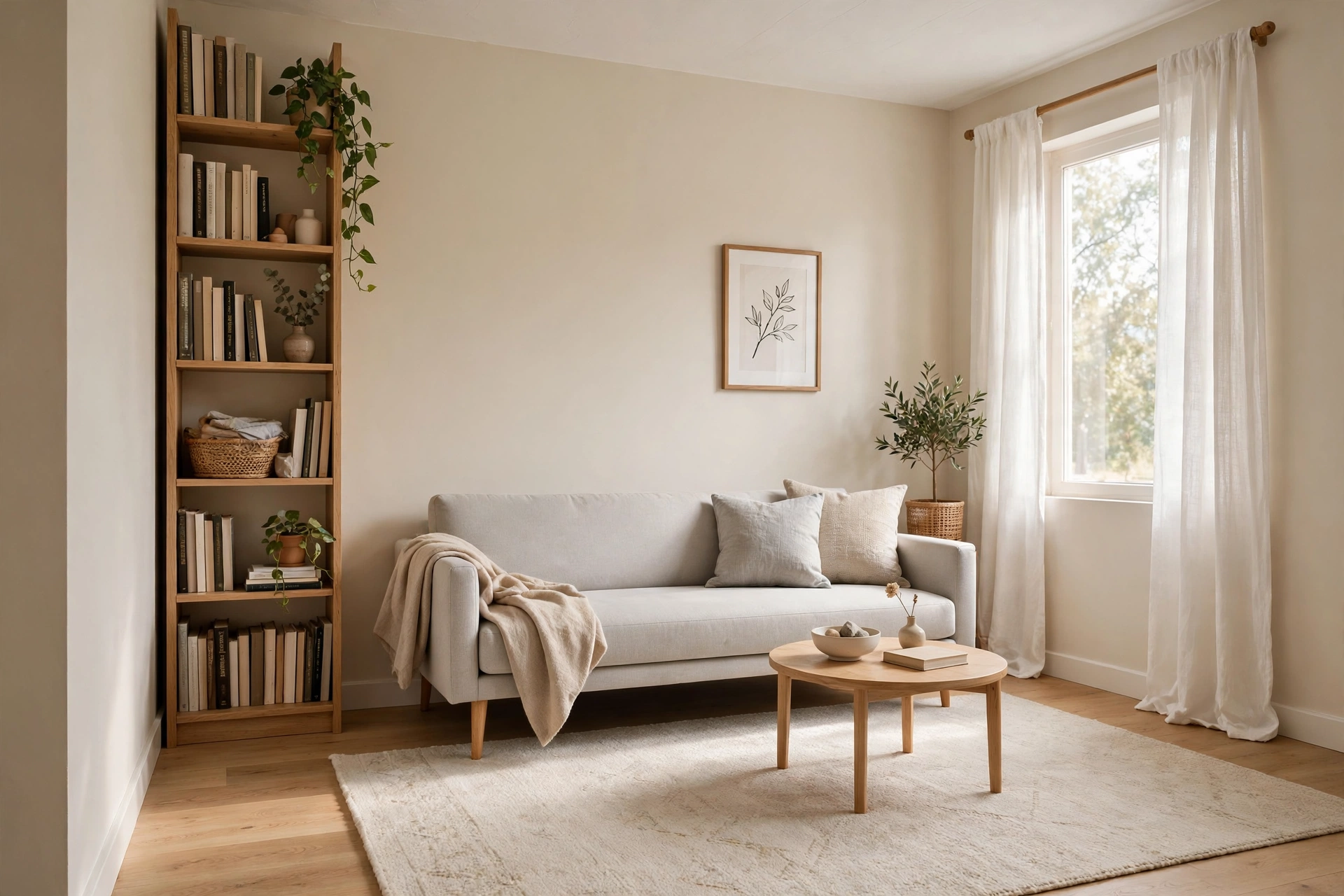
A small living room does not have to feel cramped. The right small living room decor ideas can make a compact space feel brighter, calmer, and far more spacious than its actual square footage. The secret is not buying more furniture — it is choosing pieces and colors that create a sense of openness, letting light travel, and giving everything a clear place to live. The twelve ideas below are practical, renter-friendly, and budget-conscious, and each one includes what to do and what to avoid so you get it right the first time.
1. Light, Warm Neutrals: The Foundation of Small Living Room Decor Ideas
Wall color has the biggest visual impact in a compact room. Light, warm neutrals — soft white, warm greige, pale beige — reflect natural light and blur the edges of the room so walls feel further away than they are.
How to do it: Choose one light neutral for the main walls and carry it onto the ceiling to erase the hard line where wall meets ceiling. Test large swatches at different times of day, because a color that looks warm in the morning can turn grey in the evening.
What to avoid: Stark, cold whites can feel clinical in a small space; pick versions with a warm undertone. Avoid painting one accent wall dark in a tiny room — it can close the space in instead of adding drama.
2. Hang a Large Mirror Opposite a Window
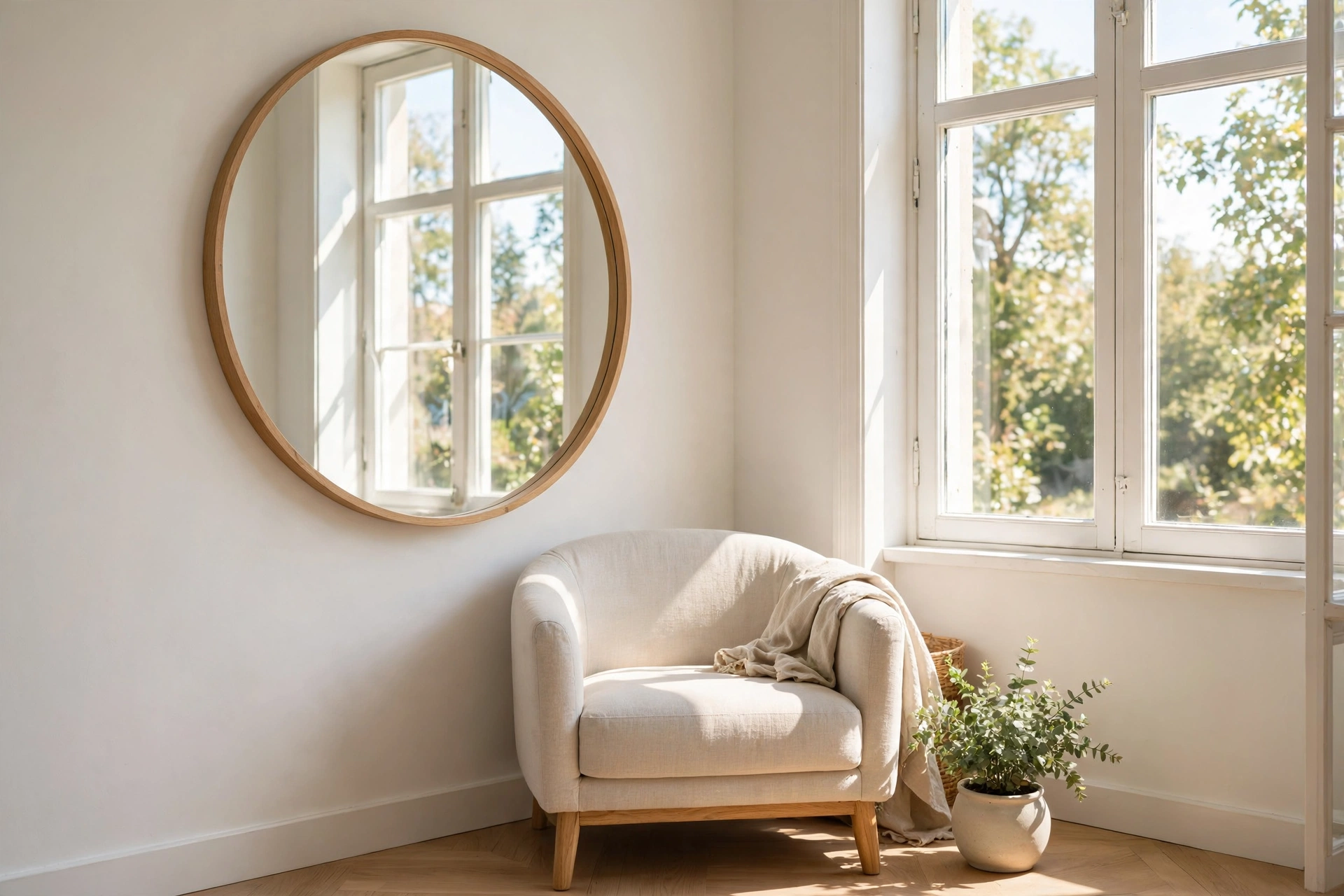
A mirror placed across from a window effectively doubles your daylight and your view, instantly making the room feel wider and brighter.
How to do it: Choose one oversized mirror rather than a gallery of small ones — a single large reflection reads as an extra window. Position it so it catches the window, not a blank wall or clutter.
What to avoid: Avoid mirrored furniture or mirrored walls, which can look busy and dated. Do not hang a mirror where it reflects a messy corner; it will amplify the clutter instead of the light.
3. Choose a Low-Profile Sofa with Visible Legs
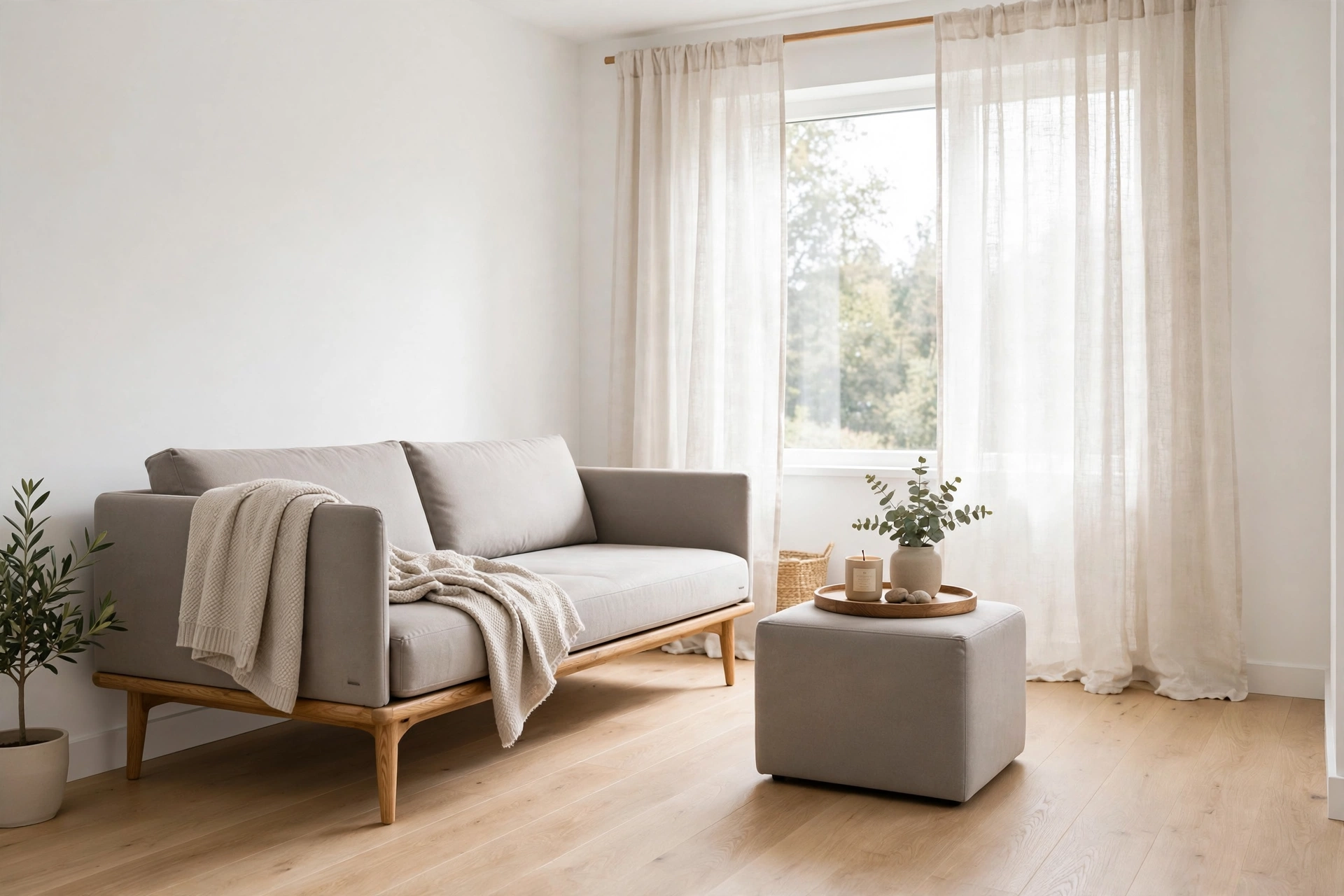
A sofa that sits low with slim, visible legs lets light and air pass underneath, which keeps the floor line continuous and the room feeling open.
How to do it: Look for a two-seater or apartment-size sofa around 70–78 inches wide with raised legs at least 4 inches tall. A tight back (no loose cushions) keeps the silhouette neat and saves several inches of depth.
What to avoid: Avoid deep, overstuffed sofas with skirts to the floor — they swallow floor space visually. Skip the matching loveseat; one sofa plus a compact accent chair seats the same people in less space.
4. Invest in Multi-Functional Furniture
In a small room, every piece should earn its place twice. Storage ottomans, sleeper sofas, and lift-top coffee tables hide clutter while serving their main job.
How to do it: Swap your coffee table for a storage ottoman with a tray on top — it works as a footrest, extra seat, and hidden storage for throws and remotes. Nesting side tables tuck away when not needed.
What to avoid: Avoid buying storage furniture without measuring the interior first — many look spacious but hold almost nothing. Do not let dual-purpose pieces become junk drawers; review what is inside them each season.
5. Build Upward with Vertical Shelving
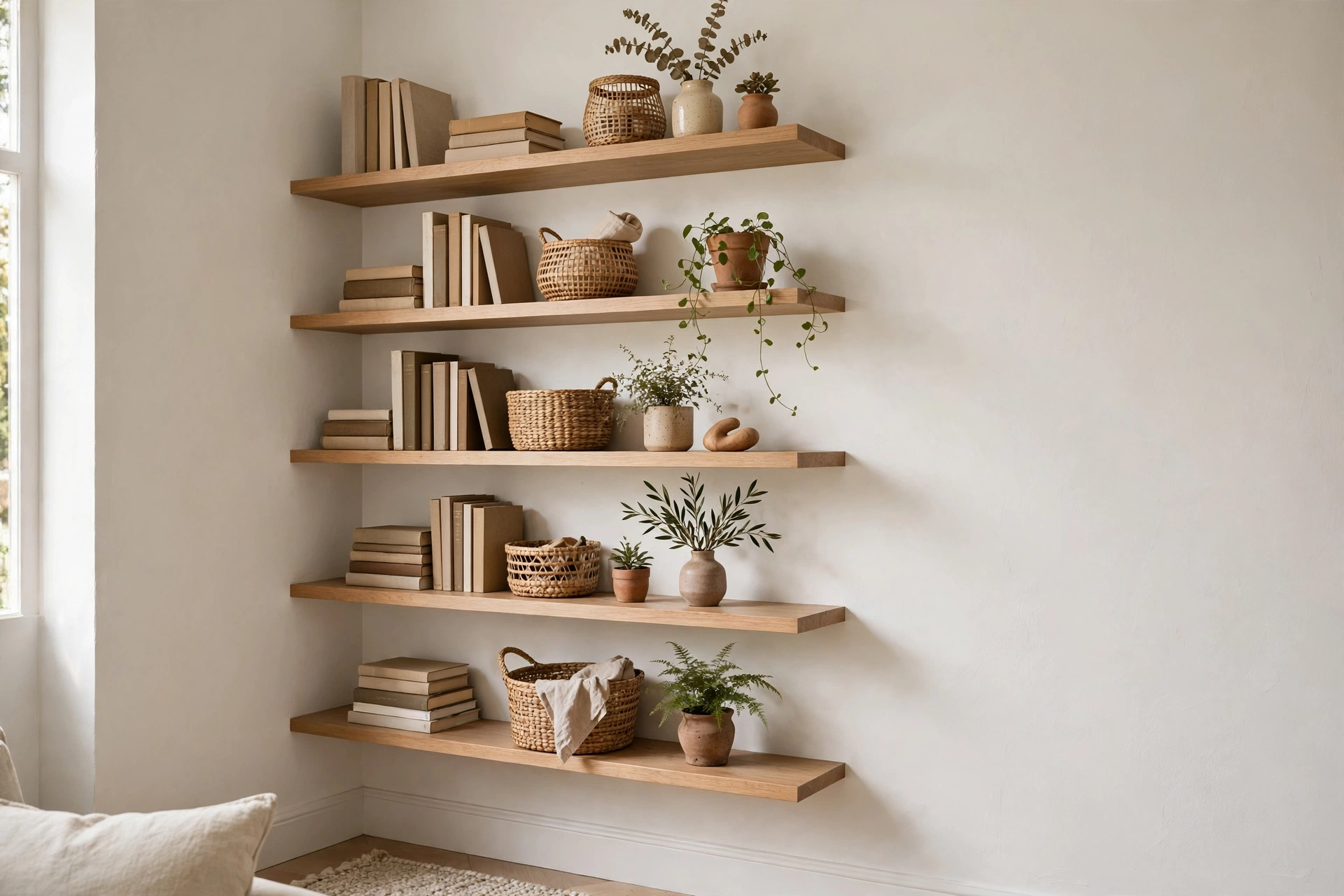
When floor space is limited, your walls are free real estate. Tall, narrow shelving draws the eye up and makes ceilings feel higher while adding serious storage.
How to do it: Install floating shelves or a tall, narrow bookcase that reaches toward the ceiling. Keep the top shelves for rarely used items in matching baskets, and style the eye-level shelves with a mix of books and a few decorative objects with breathing room between them.
What to avoid: Avoid cramming shelves edge to edge with small knick-knacks — visual clutter shrinks a room. Leave at least a third of each shelf empty so the display feels airy.
6. Anchor the Room with One Large Area Rug
One generously sized rug unifies the seating area and makes the floor read as one continuous surface, which expands the room visually. Several small rugs chop it up.
How to do it: Size the rug so the front legs of the sofa and chairs all sit on it — in most small living rooms that means 5×8 feet or 8×10 feet. A low-pile, easy-clean rug in a light tone keeps things bright; washable rug options are worth considering for busy households with kids or pets (see our guide to washable rugs that hold up in high-traffic homes).
What to avoid: Avoid a rug so small it floats in the middle of the floor like an island. Skip high-contrast busy patterns in a tiny room — they can overwhelm the space.
7. Layer Your Lighting at Three Levels
A single overhead light creates harsh shadows and flat corners. Layering ambient, task, and accent lighting makes a small room feel larger because every corner glows.
How to do it: Combine a slim arc or tripod floor lamp, a small table lamp on a side table, and a plug-in wall sconce or two. Use warm-white LED bulbs (2700–3000K) for a cozy feel, and consider ENERGY STAR certified bulbs to keep energy use low.
What to avoid: Avoid relying only on the ceiling fixture — dark corners make walls feel closer. Do not mix wildly different bulb color temperatures in one room; the clash looks chaotic.
8. Keep the Palette to Two or Three Colors
A tight, cohesive color scheme lets the eye travel smoothly across the room instead of stopping at every competing color, which creates a calm, spacious feeling.
How to do it: Pick one neutral base, one secondary color, and one accent, then repeat each at least three times around the room — pillows, throw, art, rug — so the scheme feels intentional.
What to avoid: Avoid introducing a new color with every accessory purchase; impulse buys in random colors are the fastest way to make a small room feel cluttered. Skip neon or very saturated tones as main colors.
9. Choose Glass or Acrylic Side Tables
Transparent side tables hold your lamp and coffee cup without adding visual weight, so the room keeps its open sightlines.
How to do it: Replace one bulky wooden side table with a glass-top or acrylic side table. Because you can see through it, the floor area around the sofa reads as larger.
What to avoid: Avoid using glass tables everywhere — one or two is elegant, a full set feels cold. Keep glass surfaces fingerprint-free; smudges are far more visible on them.
10. Declutter with Hidden Storage Baskets
Clutter is the enemy of spaciousness. Matching lidded baskets corral the everyday mess — chargers, toys, magazines — behind a calm, uniform front.
How to do it: Assign one basket per category and store them on shelves, in the media console, or beside the sofa. Label them if you share the space, so everyone puts things back.
What to avoid: Avoid open bins for ugly-but-necessary items; visible clutter reads as chaos in a small room. Do not buy more storage than you need — extra empty bins just become clutter themselves.
11. Hang Curtains High and Wide
Curtains hung close to the ceiling and extending past the window frame make windows look much larger, which in turn makes the whole room feel bigger.
How to do it: Mount the rod 4–6 inches above the window frame (or at ceiling height for a dramatic effect) and extend it 6–10 inches past each side so the panels stack over the wall, not the glass. Choose lightweight fabrics that filter light.
What to avoid: Avoid short curtains that end at the sill — they visually chop the wall. Skip heavy, dark drapes in a small room; they absorb light and feel oppressive.
12. Add Greenery at Different Heights
Plants bring life and a sense of depth. Placing them at floor, shelf, and hanging levels creates layers that make the room feel more dimensional.
How to do it: Combine one medium floor plant in a corner, a small plant on a shelf, and a trailing plant on a high shelf or hanging planter. Low-maintenance options like pothos, snake plants, and ZZ plants thrive indoors.
What to avoid: Avoid one giant plant that blocks a walkway or window — scale matters. Do not crowd every surface with plants; three well-placed ones beat ten scattered ones.
Frequently Asked Questions
What is the best rug size for a small living room?
In most small living rooms, a 5×8-foot rug works well, and an 8×10-foot rug can work if the furniture arrangement allows it. The key rule is that the front legs of your sofa and chairs should rest on the rug so the seating area reads as one connected zone.
Can dark colors work in a small living room?
Yes, in small doses. Deep colors on one element — like a single accent chair, a piece of art, or bookshelf backing — can add richness. The trick is keeping the large surfaces (walls, sofa, rug) light so the room still feels open.
What size sofa fits a small living room?
An apartment-size sofa between 70 and 78 inches wide usually fits comfortably while leaving room to move around it. Leave at least 30 inches of walkway space in front of and around the sofa so the room does not feel blocked.
How should I arrange furniture in a small living room?
Float the sofa a few inches off the wall rather than pushing everything against the perimeter — counterintuitively, this makes the room feel larger. Keep the main traffic path clear and angled, and pull seating into a tight conversational grouping instead of spreading it out.
How do I make my small living room feel less cluttered?
Give every object a home, favor closed storage over open piles, and edit ruthlessly — if an item has no purpose and no beauty, it should leave the room. A weekly five-minute reset keeps clutter from creeping back. For more ideas, see stylish living room decor ideas that balance comfort and practicality.
Sources
- ENERGY STAR — residential lighting guidance and certified bulb information
- National Association of Home Builders (NAHB) — home design and remodeling trend data