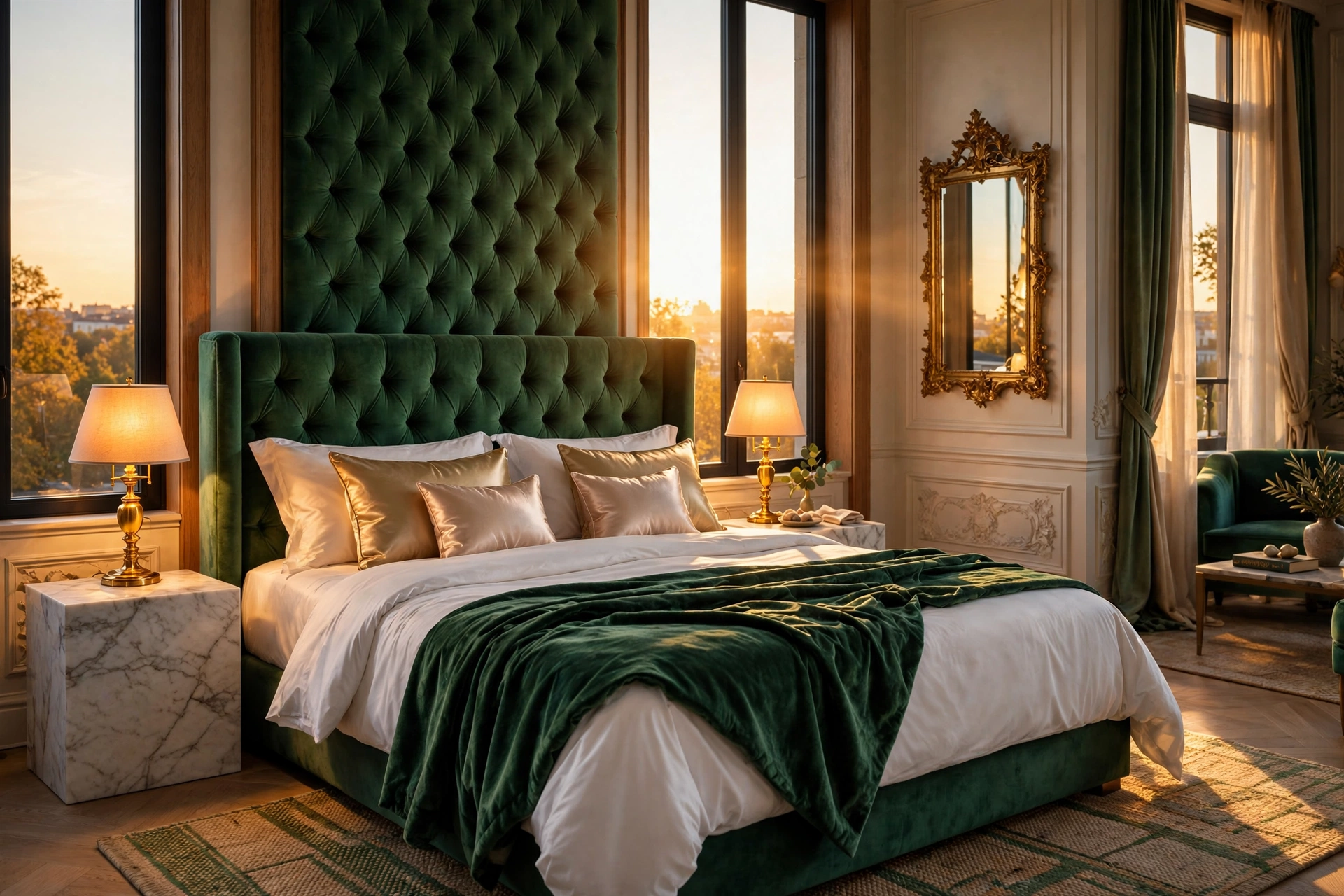
True luxury in a bedroom is not about spending the most money. It is about decisions that make the room feel calm, composed, and finished. These luxury bedroom decor ideas focus on what actually creates the five-star feeling: a confident bed, layered light, a restrained palette, and surfaces that are almost clear. Each section explains how to do it well and what to avoid, so you can spend where it shows and skip what never pays off.
Work through the ideas in order and the room comes together as one quiet, elegant space rather than a collection of separate purchases. The same restraint that runs through our guides to luxury bathroom decor ideas and luxury living room decor ideas applies here too: fewer things, better chosen.
1. Choose a Tall Upholstered Headboard
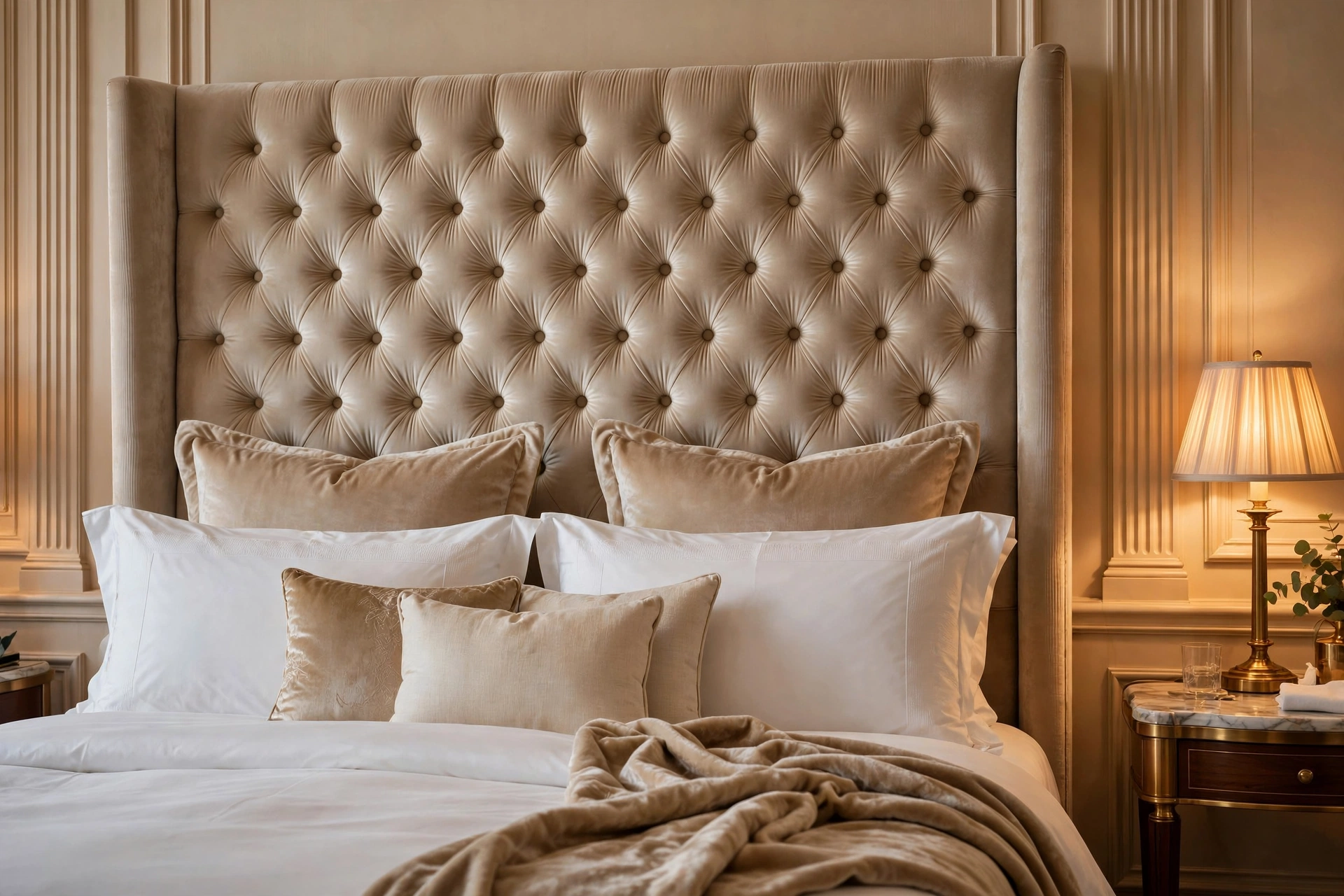
How to do it: The headboard sets the tone of the entire bedroom. Tall, upholstered designs in velvet or linen, in deep green, champagne, or warm grey, read as custom furniture and instantly lift the bed. Look for tufting or clean channel stitching, and choose a height that rises well above the pillows. If a new headboard is out of reach, a quality slipcover in a rich fabric over your existing frame gets you most of the way there.
What to avoid: A low, flimsy headboard, or no headboard at all. The bed is the largest object in the room; when it ends halfway up the wall, the whole bedroom feels unfinished no matter what you do with the walls.
2. Layer Bedding Like a Boutique Hotel
How to do it: Start with crisp white or ivory sheets, add a duvet with a simple textured cover, then layer deliberately: a velvet or linen throw folded across the foot and a mix of sleeping pillows, Euro shams, and two or three decorative cushions in complementary tones. Press or steam the top layer before guests arrive. The goal is a bed that looks inviting, not a bed that takes twenty minutes to dismantle at night.
What to avoid: Dozens of throw pillows in clashing patterns and colors. Each extra pillow makes the bed harder to use and the room harder to rest in. Five to seven pieces in a tight palette is plenty.
3. Commit to a Three-Tone Palette
How to do it: Luxury rooms almost always rest on restraint. Pick one base tone for walls and bedding, such as warm white or soft stone; one depth tone, such as emerald, navy, or chocolate; and one metal accent, such as brushed brass or aged gold. Repeat each tone at least three times around the room so nothing looks accidental. This discipline is what makes inexpensive pieces look considered and expensive pieces look calm.
What to avoid: Introducing a fourth or fifth color through bedding, art, or accessories bought separately. Each stray color breaks the calm. If you love pattern, keep it inside your three tones.
4. Layer Warm Lighting, Not One Bright Bulb
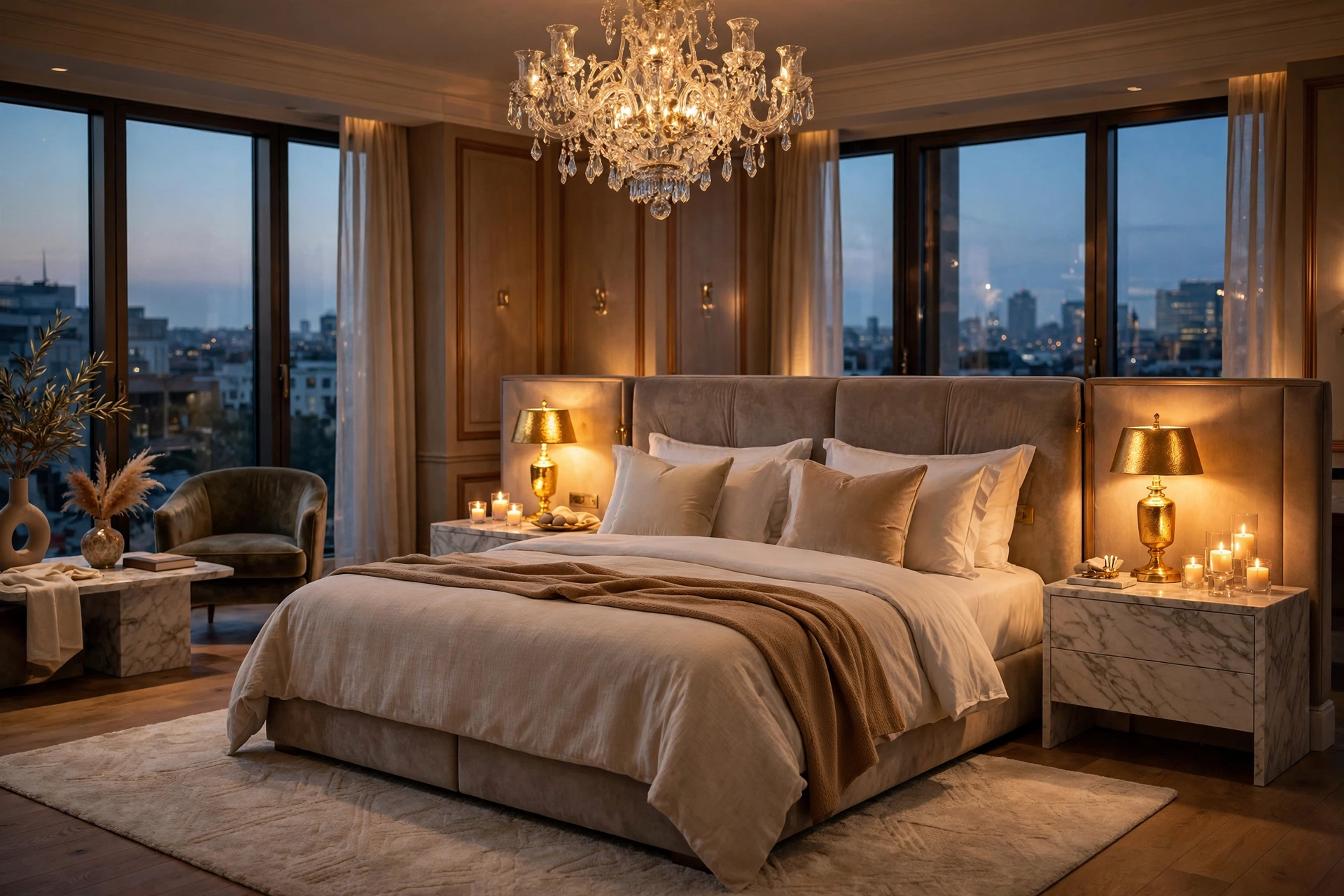
How to do it: Plan three layers of light. Ambient light comes from a ceiling fixture or recessed lights on a dimmer. Task light comes from matching bedside lamps for reading. Accent light comes from candles, a small lamp on the dresser, or picture lights above art. Keep every bulb warm, around 2700 Kelvin, so skin, fabric, and wood all glow instead of looking washed out.
What to avoid: A single cool-white ceiling fixture as the only source. It flattens the room, makes textures disappear, and turns a beautiful bedroom cold and clinical after dark.
5. Hang a Statement Mirror
How to do it: A tall mirror with a slim gold or champagne frame does two jobs at once: it reflects light and doubles the sense of space. Lean a floor-length mirror against the wall beside the dresser, or hang a large round or arched mirror above it. Position it where it catches a window or a lamp so it reflects something beautiful, not the laundry pile.
What to avoid: Gallery walls of small mirrors, which fragment the room and read as decor filler. One generous mirror has ten times the impact of five small ones.
6. Add a Quiet Reading Corner
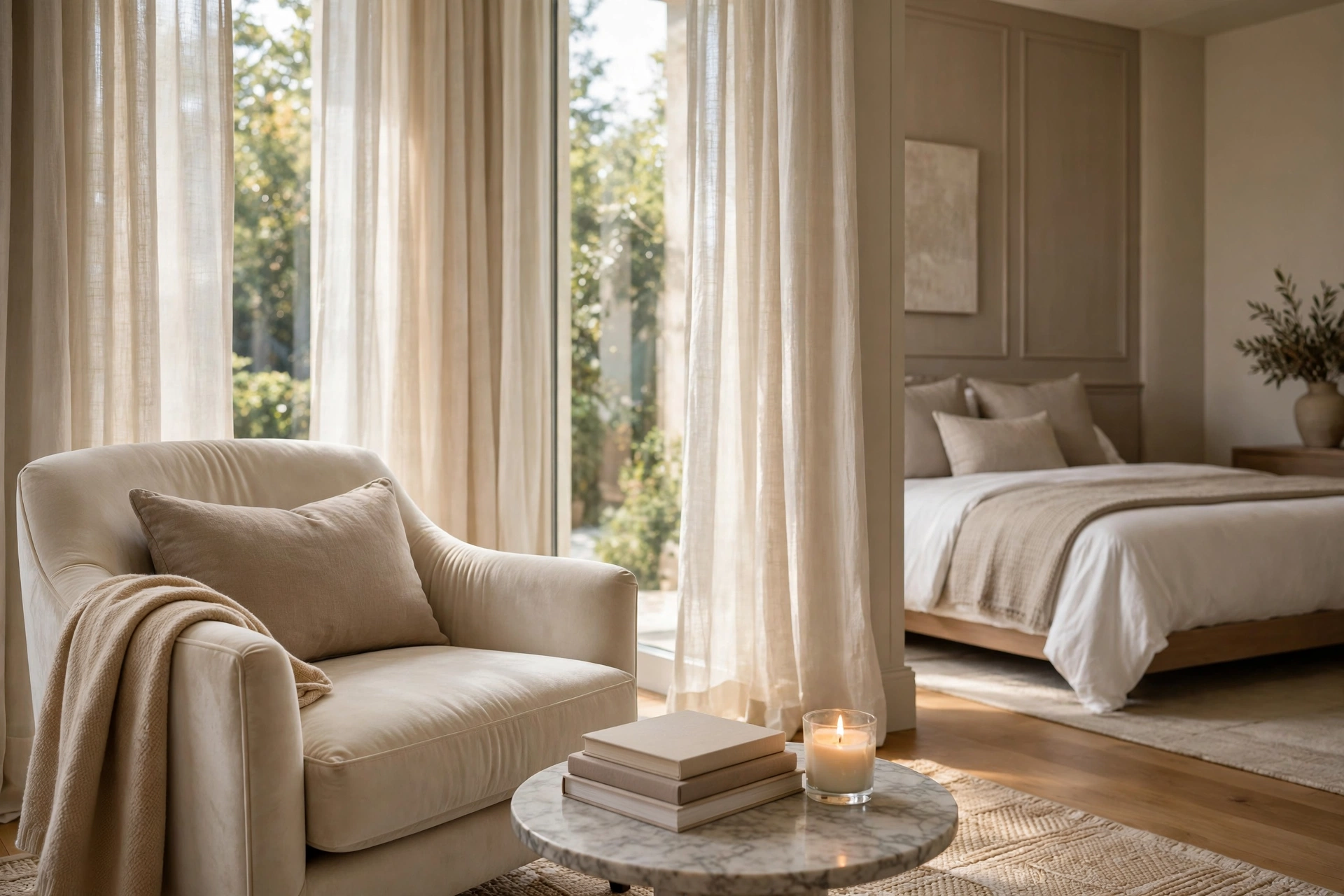
How to do it: If you have even a small spare corner, a comfortable armchair, a small side table, and a floor lamp turn it into the kind of moment people remember from good hotels. A velvet or boucle chair in your base tone, a marble or wood side table with a book and a candle, and soft light make the corner feel intentional. It also gives the room a second place to be, which makes it feel larger.
What to avoid: Turning the corner into overflow storage for clothes and bags. An armchair buried under laundry ruins the luxury effect faster than anything else in this list. Give that chair one job: sitting.
7. Dress the Windows Properly
How to do it: Hang curtain rods high and wide so drapes stack off the glass and the window looks grand. Floor-length panels in linen or velvet, in your base tone, add softness and sound dampening that make the room feel genuinely expensive. Layer sheer curtains underneath for daytime privacy without losing light. Double the fullness of the fabric for panels that look rich rather than flat.
What to avoid: Short curtains that stop at the sill, or rods mounted tight to the frame. Both shrink the window and the room. Curtains should kiss the floor; anything hovering above it looks like a mistake.
8. Choose Nightstands That Match the Room
How to do it: Nightstands should feel like furniture, not afterthoughts. Marble or lacquered tables with gold legs, small chests of drawers, or a matched pair of bedside tables in a rich wood all work. Style them simply: a lamp, one book, and a small vase or candle. Matching nightstands on both sides of the bed create the symmetry that hotel suites rely on.
What to avoid: Mismatched, undersized nightstands that are shorter than the mattress. A tiny table next to a tall bed looks lost. Nightstand tops should sit level with or just above the mattress.
9. Keep Surfaces Almost Clear
How to do it: Luxury is largely the absence of visual friction. Give every item on the dresser, nightstand, and bench a reason to be there. A tray that corrals perfume, a small stack of two books, one plant or vase, and clear space around them. Build a quick five-minute nightly reset into your routine: charge devices inside a drawer, return clothes to the closet, clear the water glass. A calm room resets the mind too.
What to avoid: The slow creep of chargers, receipts, half-read mail, and unmatched cups across every surface. Ten small items on a dresser cancel out an expensive mirror and good lighting in seconds.
10. Bring In One Living Element
How to do it: A single orchid, a sculptural fiddle-leaf fig in the corner, or fresh eucalyptus in a tall vase adds life that no object can. Choose one plant you can genuinely keep alive and place it where it gets the light it needs. Fresh stems, replaced weekly, are the finishing touch in every five-star hotel room and they work just as well at home.
What to avoid: Filling the room with dusty faux plants. One fake plant fools nobody up close, and three of them make the room feel like a waiting area. If plants die on you, one beautiful vase of fresh stems beats five plastic ones.
11. Upgrade the Rug Under the Bed
How to do it: A large rug anchored under the bed softens everything: footsteps, echoes, and the visual transition from bed to floor. Choose one big enough to extend at least 18 to 24 inches on each side, in a soft wool or high-quality flat weave with a subtle pattern. A rug that the nightstands also sit on creates a composed island around the bed, which is exactly what expensive bedrooms do.
What to avoid: A tiny rug floating in the middle of the room, or no rug at all. An undersized rug chops up the floor and makes the bed look smaller. Measure first; generous is the rule.
12. Hide the Clutter, Ruthlessly
How to do it: Nothing says luxury like things having a home. Use the space inside nightstands and under the bed for storage, keep a lidded basket or ottoman for evening throw-offs, and route cables behind furniture. The goal is that a guest walking in sees only styled surfaces. For a deeper refresh, our cozy bedroom decor ideas guide pairs well with these principles when comfort is the priority.
What to avoid: Open bins, visible cords, and the treadmill-turned-clothes-rack. Every visible storage shortcut quietly tells the eye the room is not finished.
Luxury Bedroom Decor FAQs
What makes a bedroom look luxurious on a budget?
Restraint, not spending. A three-tone palette, tall headboard silhouette, layered warm lighting, and clutter-free surfaces create the five-star feeling for very little money. Paint, curtains hung high and wide, and matching nightstands deliver the biggest transformation per dollar.
How many colors should a luxury bedroom have?
Three is the sweet spot: one base tone, one depth tone, and one metal accent. Luxury rooms feel calm because the eye has little to process. Adding a fourth or fifth color usually makes the room feel busy rather than rich.
Are white sheets really better?
Crisp white or ivory sheets are the hotel standard for a reason: they look clean, they match everything, and they make the bed feel fresh. The color comes from the throw and cushions layered on top, which are easy to change by season.
How do I make a small bedroom feel luxurious?
Lean into the calm. A statement mirror doubles light and space, wall-mounted bedside lights free up nightstand room, and a strict three-tone palette stops a small room from feeling busy. Clear surfaces matter even more in tight quarters.
Sources
Design principles referenced from widely published interior design guidance: warm lighting temperatures from the Illuminating Engineering Society’s residential lighting recommendations; hotel-suite layering techniques as described in hospitality design coverage by Architectural Digest and Elle Decor.