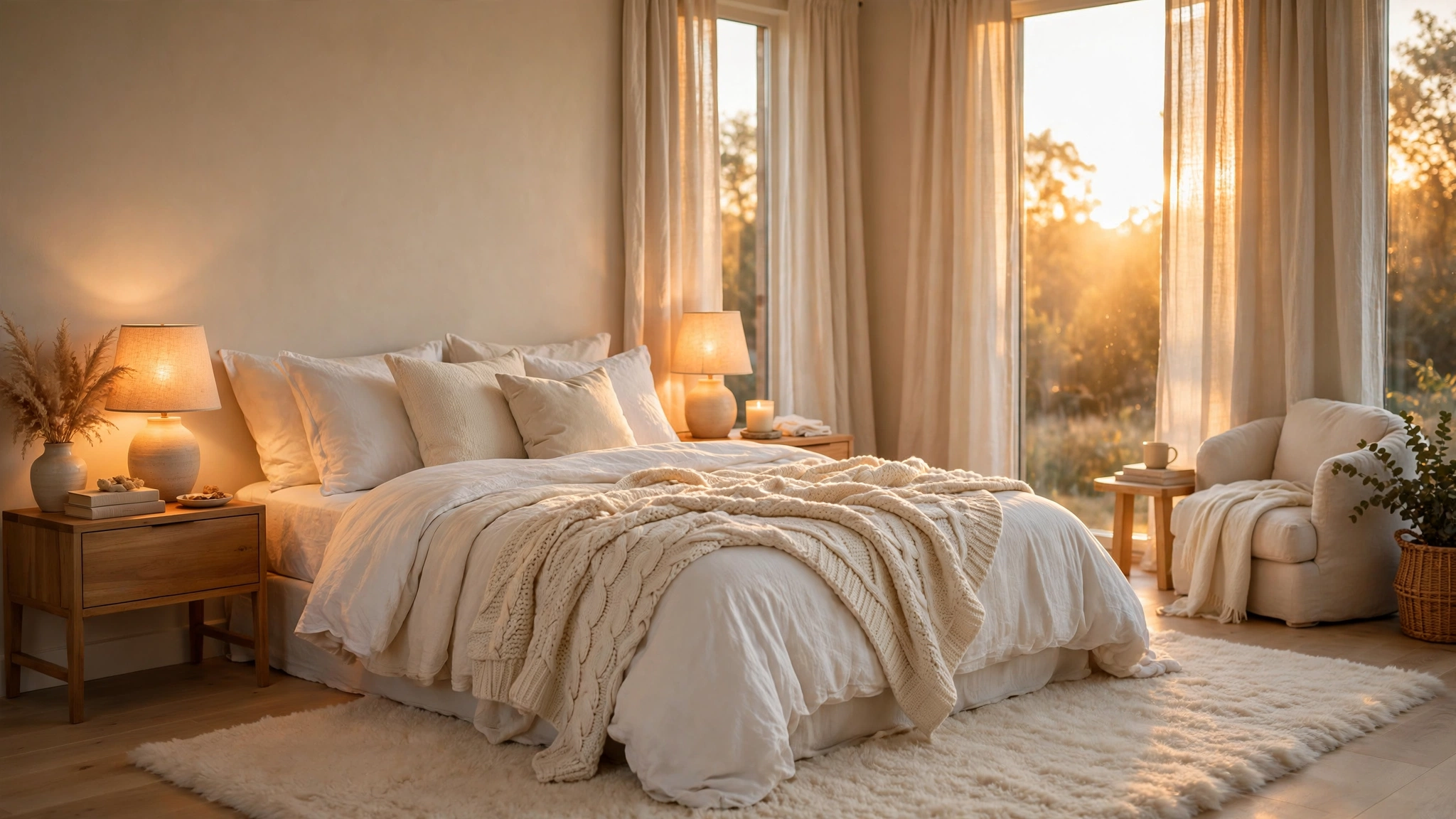
A bedroom should be the calmest room in the house — the place where the day’s noise fades and real rest begins. The right cozy bedroom decor ideas do not require a full renovation or a designer budget; they work by layering softness, warmth, and intention into the space you already have. The ten ideas below are practical and renter-friendly, and each one includes exactly how to do it plus what to avoid, so your bedroom ends up feeling like a retreat instead of just another room.
1. Layer Your Bedding Like a Boutique Hotel Bed: The Heart of Cozy Bedroom Decor Ideas

The bed is the visual centerpiece of every bedroom, and layered bedding is the fastest way to make it look and feel inviting. Hotels achieve that plush, sink-in look by stacking layers — a fitted sheet, a flat sheet, a duvet or comforter, and a throw folded across the foot — instead of relying on one heavy blanket.
How to do it: Start with breathable cotton or linen sheets in a neutral tone, add a medium-weight duvet, then finish with a textured throw and two to four sleeping pillows plus two decorative ones. Stick to one color family (warm whites, soft taupes, muted sage) so the layers look curated rather than chaotic.
What to avoid: Avoid piling on so many decorative pillows that making the bed becomes a chore — you will stop doing it. Skip slippery satin bedding if you toss and turn; it slides off and looks messy by morning.
2. Switch to Warm, Low Lighting
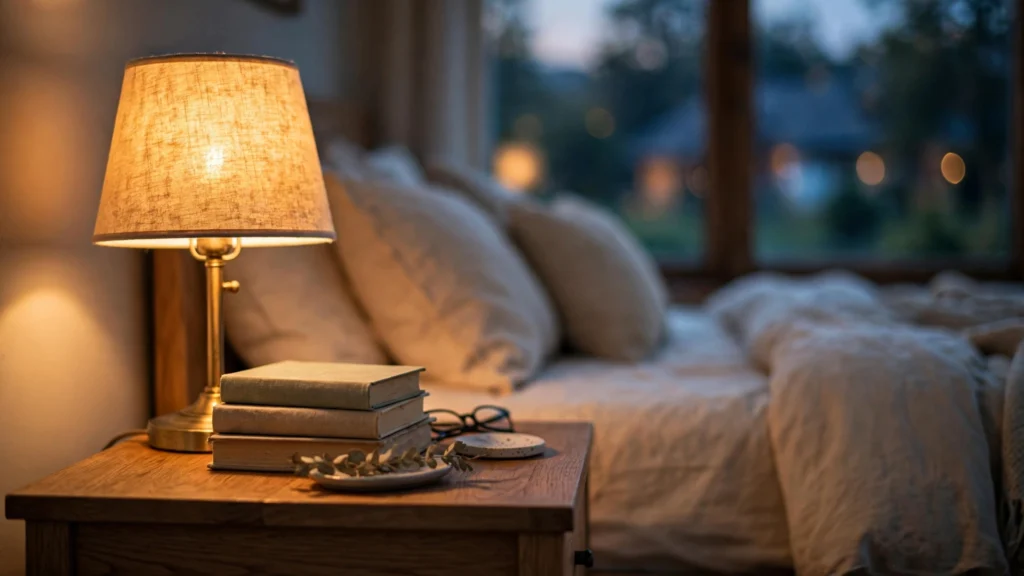
Harsh overhead lighting is the enemy of a cozy bedroom. Warm, layered light at bedside level signals your body that the day is winding down and instantly makes the room feel calmer and more intimate.
How to do it: Replace the main ceiling light’s job with two bedside lamps or a pair of plug-in wall sconces, and use warm-white LED bulbs (2700–3000K). A small dimmable lamp on a dresser adds a third layer of glow for reading or winding down. If you want to keep energy use in check, look for ENERGY STAR certified bulbs, which use far less electricity than old incandescents.
What to avoid: Avoid cool daylight bulbs (5000K+) in the bedroom — they feel clinical and can make it harder to relax. Do not rely on a single bright overhead fixture; it flattens the room and kills the mood. For more on lighting layers, see our guide to small living room decor ideas, which covers three-level lighting in detail.
3. Carve Out a Reading Corner (Even a Small One)
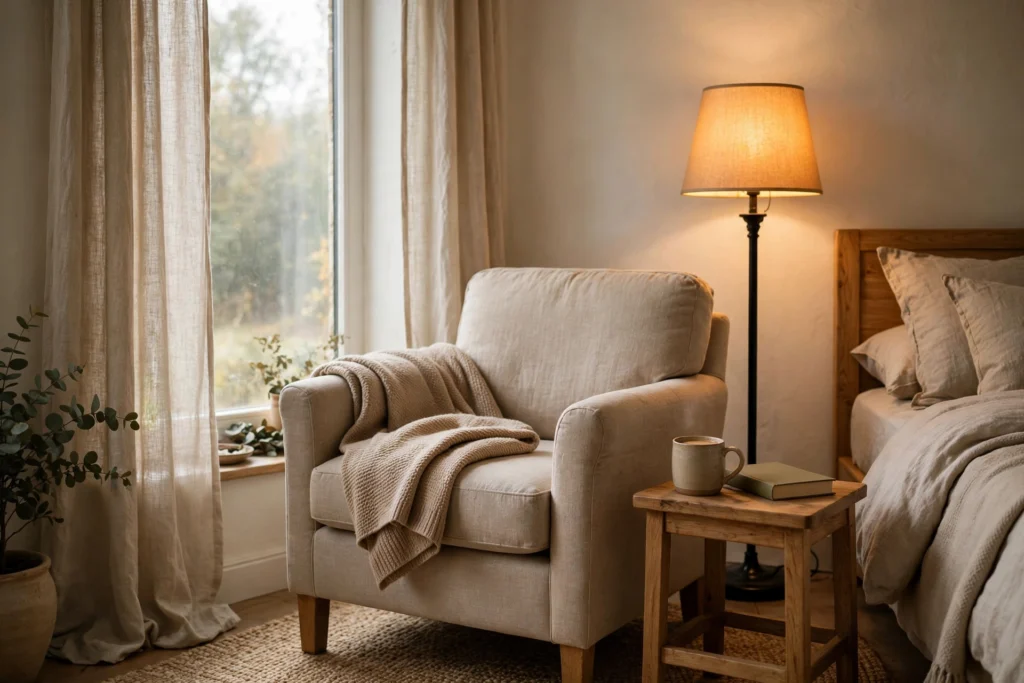
A dedicated corner for reading, journaling, or simply sitting with a cup of tea gives the bedroom a sense of purpose beyond sleep — and it is one of the most-loved cozy bedroom decor ideas because it costs almost nothing.
How to do it: Place a comfortable accent chair (even a sturdy armchair you already own) near a window or in an unused corner, add a small side table, a floor lamp or reading light, and a soft throw. A tiny rug under the chair defines the zone.
What to avoid: Avoid squeezing a reading chair into a walkway or in front of the closet door — it will become an obstacle, not a retreat. Skip bulky recliners in small bedrooms; a slim-profile chair keeps the room feeling open.
4. Choose a Calming, Cohesive Color Palette
Color sets the emotional temperature of a bedroom. Soft, muted tones — warm white, greige, dusty blue, sage green, clay — lower visual noise and help the room feel restful, while a tight palette keeps everything looking intentional.
How to do it: Pick one neutral base for the largest surfaces (walls, bedding), one secondary color (curtains, rug), and one accent (pillows, art). Repeat each color at least three times around the room so the scheme feels connected.
What to avoid: Avoid high-contrast, saturated colors on large surfaces — bright red or electric blue walls energize rather than calm. Do not introduce a new color with every accessory; random impulse buys in clashing colors are the fastest way to make a bedroom feel restless.
5. Soften the Floor with a Plush Area Rug
Stepping onto a cold hard floor first thing in the morning ruins the cozy illusion instantly. A soft rug under or beside the bed adds warmth underfoot, absorbs sound, and visually anchors the sleeping zone.
How to do it: Size the rug so it extends at least 18–24 inches beyond each side of the bed — for a queen bed, an 8×10 rug usually works; for tight spaces, two runners on either side do the job. Choose a medium or high pile in a washable material if you want easy care.
What to avoid: Avoid a tiny rug that floats under the center of the bed like an island; it looks accidental. Skip thin, scratchy rugs — if it is not pleasant barefoot, it is not doing its job.
6. Hang Curtains High and Wide
Floor-length curtains make windows look taller, block unwanted morning light, and add a softness that blinds alone cannot match. They are one of the simplest cozy bedroom decor ideas with the biggest visual payoff.
How to do it: Mount the rod 4–6 inches above the window frame and extend it 6–10 inches past each side so the panels stack over the wall, not the glass. Choose the curtain length so the fabric just kisses the floor, and consider blackout lining if streetlights or early sun disturb your sleep.
What to avoid: Avoid sill-length curtains in a bedroom — they visually chop the wall and look unfinished. Skip heavy velvet in very small rooms if it overwhelms the space; linen-look blackout curtains give the same light control with less visual weight.
7. Bring In Natural Textures — Wood, Linen, Wool
Coziness is largely a tactile experience. Natural materials — a wooden bench at the foot of the bed, linen pillow covers, a chunky wool throw, a jute basket — add the organic warmth that makes a room feel lived-in rather than staged.
How to do it: Introduce three to four natural textures across the room: a wooden tray on the nightstand, linen or cotton-linen blend bedding, a knit or wool throw, and one woven basket for extra blankets. Let the materials’ imperfections show — that is the point.
What to avoid: Avoid going overboard with faux finishes that try too hard to look natural; one or two genuine pieces beat five plastic imitations. Do not mix too many wood tones — stick to one or two finishes so the room stays calm.
8. Style Nightstands with Intention
Cluttered nightstands covered in chargers, half-read mail, and random bottles quietly stress the eye every night. A tidy, intentional nightstand makes the whole bedroom feel calmer — and it is free to fix.
How to do it: Limit each nightstand to four things: a lamp, a book or two, a small dish or tray for essentials, and one personal object (a photo, a small plant). Corral chargers into a small box or behind the nightstand. For a bigger reset, our budget kitchen organization ideas post covers the same “a home for everything” system that works on nightstands too.
What to avoid: Avoid using the nightstand as a charging station for every device in the house — the tangle of cables defeats the purpose. Skip oversized nightstands in small bedrooms; a floating shelf or slim stool can serve the same role in half the footprint.
9. Choose Art That Feels Personal, Not Loud
Bedroom art should soothe, not shout. Landscapes, abstract washes in your palette, black-and-white photography, and meaningful personal pieces all work — anything that makes you exhale when you look at it.
How to do it: Hang one larger piece above the bed or the dresser rather than scattering many small frames; a single focal point feels calmer. Keep the art’s colors inside your room’s palette so it blends rather than competes. Hang it at eye level — the center of the piece roughly 57–60 inches from the floor.
What to avoid: Avoid busy, high-contrast prints or motivational quote art that mentally revs you up before sleep. Do not hang art too high — floating near the ceiling disconnects it from the furniture below.
10. Tuck Technology Out of Sight
Glowing screens and blinking chargers work against everything cozy. Research from sleep experts consistently links a screen-free wind-down with better rest, and visually, hiding tech removes the “office” feeling from the bedroom.
How to do it: Charge phones outside the bedroom or inside a closed drawer, use an old-fashioned alarm clock, and hide the TV inside a cabinet or behind sliding art panels if you keep one in the room. The National Sleep Foundation recommends keeping the bedroom cool, dark, and quiet — removing visible tech helps on all three fronts.
What to avoid: Avoid falling asleep with the TV on as background noise — it fragments sleep even when you do not remember waking. Do not place a desk with a monitor in the bedroom if you can avoid it; working where you sleep blurs the mental boundary between the two.
Frequently Asked Questions
What colors make a bedroom feel cozy?
Warm, muted tones work best: warm white, greige, soft taupe, dusty blue, sage green, and clay. These colors lower visual stimulation and pair well with warm lighting. Keep the palette to two or three colors repeated around the room for a calm, cohesive feel.
How can I make my bedroom cozy on a budget?
Start with the highest-impact, lowest-cost changes: rearrange what you own, declutter surfaces, switch to warm bulbs, and add one textured throw and a set of pillow covers. Paint is the next best value — one accent wall or a full room in a soft neutral typically costs less than a single piece of furniture. See our small living room decor ideas for more budget styling tricks that translate to bedrooms.
What kind of lighting is best for a cozy bedroom?
Layered, warm lighting: bedside lamps or sconces with 2700–3000K warm-white bulbs, plus one dimmable accent light. Avoid relying on a single overhead fixture, and keep daylight-temperature bulbs (5000K+) out of the bedroom entirely.
How do I make a small bedroom feel cozy but not cramped?
Keep furniture low-profile and appropriately scaled, use a light wall color, hang curtains high and wide to fake taller windows, and choose one larger rug instead of several small ones. Leave breathing room around the bed — coziness comes from softness and warmth, not from filling every inch.
What is the 60-30-10 rule for bedroom decor?
It is a simple color formula: 60% of the room in a dominant color (usually a neutral — walls, bedding), 30% in a secondary color (curtains, rug, upholstered pieces), and 10% in an accent color (pillows, art, small decor). It keeps the palette balanced so the room feels designed rather than random.
Sources
- National Sleep Foundation — bedroom environment guidance for better sleep
- ENERGY STAR — residential lighting guidance and certified bulb information