Why German Shepherds Have Always Fascinated Me
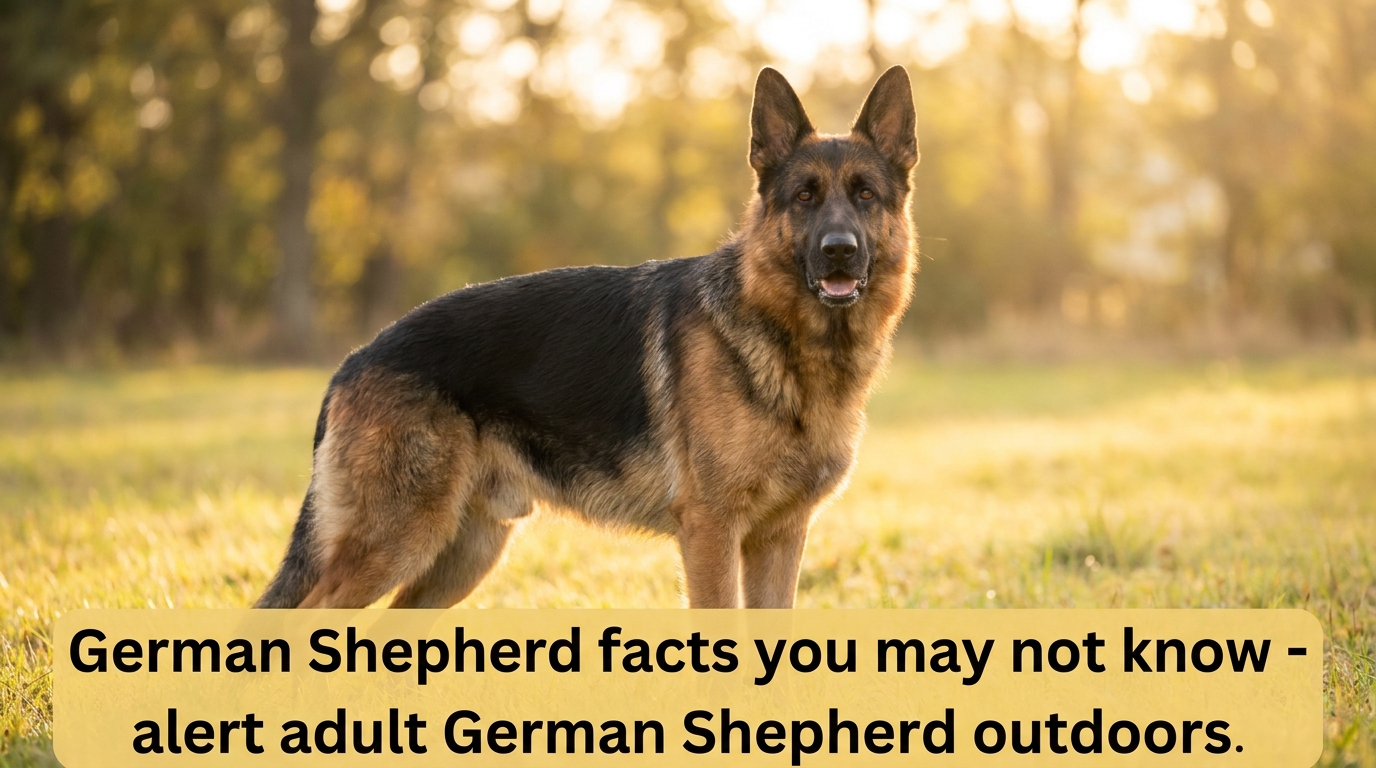
German Shepherd Dog Facts You May Not Know ‘ve spent years reading about working dog breeds, and no matter how many articles I go through, German Shepherds always pull me back in. There’s something about them that feels different from other breeds — maybe it’s the way they seem to think before they act, or maybe it’s just how much history is packed into one dog. Most people know the basics: loyal, smart, great with police and military work. But the deeper I dug, the more I realized how many German Shepherd facts you may not know are hiding in plain sight.
Take their origin, for instance. A lot of people assume this breed has been around forever, tied to some ancient herding tradition. It hasn’t. The German Shepherd is actually one of the “younger” purebred dogs in history, shaped deliberately by one man’s very specific vision — not centuries of natural evolution. That single detail changes how you look at every other trait this breed has, from their intelligence to their work drive.
And that’s really just the beginning.
How One Man’s Vision Created the German Shepherd

Here’s the part that surprised me the most when I first read about it. Back in 1899, a former cavalry officer named Max von Stephanitz attended a local dog show in Germany, and one dog caught his attention completely. Not because it looked “pretty” by show standards, but because of how it moved — controlled, alert, purposeful. That dog’s name was Horand, and Stephanitz bought him almost on the spot.
German Shepherd Dog Facts What makes this story different from most breed origin stories is the intention behind it. Stephanitz wasn’t chasing appearance. He was obsessed with function — a dog that could think, work long hours, and adapt to whatever job was placed in front of it. Horand became the foundation of everything we now call the German Shepherd, and every dog of this breed today traces back to that one decision made at a small show over a century ago.
This is one of those German Shepherd facts you may not know that actually explains a lot about the breed’s personality. They weren’t bred to sit pretty. They were bred to work, solve problems, and stay loyal under pressure — and that mindset still shows in every German Shepherd you meet today.
Surprising Physical and Sensory Facts
German Shepherd Dog Facts Their Nose Power Is Beyond What You’d Expect
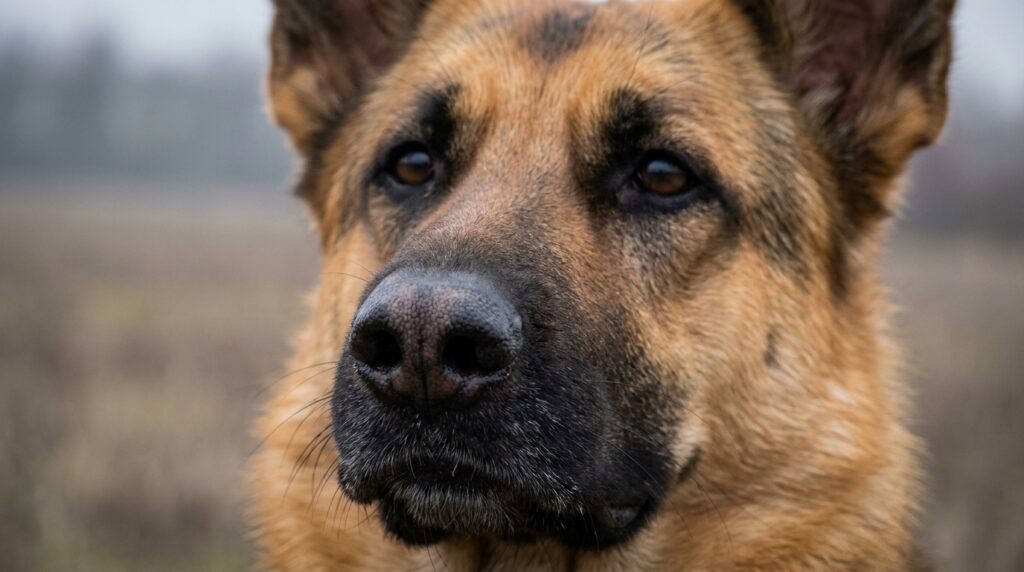
I always knew dogs had a strong sense of smell, but German Shepherds operate on a completely different level. Their nose contains somewhere around 225 million scent receptors, compared to the roughly 5-6 million humans carry. That’s not a small gap — it’s an entirely different sensory world. This is part of why they’re the go-to breed for detection work, whether it’s search-and-rescue, tracking a missing person, or sniffing out things hidden deep inside luggage or walls.
What’s interesting is how this ability shows up in everyday life too, not just professional work. Owners often notice their German Shepherd reacting to smells long before there’s any visible reason — a stranger two streets away, rain that hasn’t started yet, or a family member’s mood shift picked up through scent changes in sweat. It’s easy to miss unless you’re paying close attention.
Coat, Tail, and Body Facts Most Owners Miss
Their double coat isn’t just for looks either. It’s a functional insulation system — built to keep them warm in cold weather and surprisingly cool in heat, which is part of why shaving a German Shepherd’s coat is usually discouraged by vets and groomers alike.
How Smart Are They, Really — Intelligence & Emotional Facts
Where They Rank Among the World’s Smartest Breeds
Intelligence gets thrown around a lot when people talk about dog breeds, but German Shepherds actually back it up with research. In canine intelligence studies, they consistently land in the top three smartest breeds, right behind Border Collies and Poodles. What that means in practical terms is a German Shepherd can learn a new command in as few as five repetitions, and understand well over 100 words and gestures with consistent training.
But raw intelligence isn’t the full picture. What sets this breed apart is how they apply that intelligence — they don’t just memorize commands, they read situations. A German Shepherd will often adjust its behavior based on context rather than pure repetition, which is exactly why they’re trusted with jobs that require judgment calls, not just obedience.
Their Emotional Bond With Humans
The part I find genuinely underrated is their emotional sensitivity. These dogs pick up on tone of voice, body language, and even shifts in a household’s routine faster than most breeds. It’s common for owners to describe their German Shepherd showing up beside them during stressful moments, almost before anything is said out loud. That emotional attentiveness is rarely mentioned alongside their working-dog reputation, but it’s just as real.
Lesser-Known Historical Facts
Their Role in the World Wars
This is a part of German Shepherd history that doesn’t get talked about nearly enough. During both World War I and World War II, these dogs weren’t just present on the battlefield — they were essential to it. They carried messages between trenches when radio communication was too risky, hauled medical supplies to wounded soldiers, and stood guard through conditions most animals would never survive. Some accounts describe them dragging injured men back to safety, working through gunfire without hesitation.
What strikes me most is that none of this was forced obedience. It was the same trait Stephanitz had bred into them decades earlier — a dog that thinks under pressure instead of freezing.
German Shepherd Dog Facts
The Hollywood Connection Nobody Talks About
Here’s one of those German Shepherd facts you may not know that feels almost unbelievable today. After World War I, an American soldier found an abandoned German Shepherd puppy in France and brought him home, naming him Rin Tin Tin. That single dog went on to star in over 20 Hollywood films and became one of the biggest box office draws of his time — a war orphan who accidentally introduced an entire breed to the world.
Working Roles Beyond What You Already Know
Police, Military & Service Dog Facts
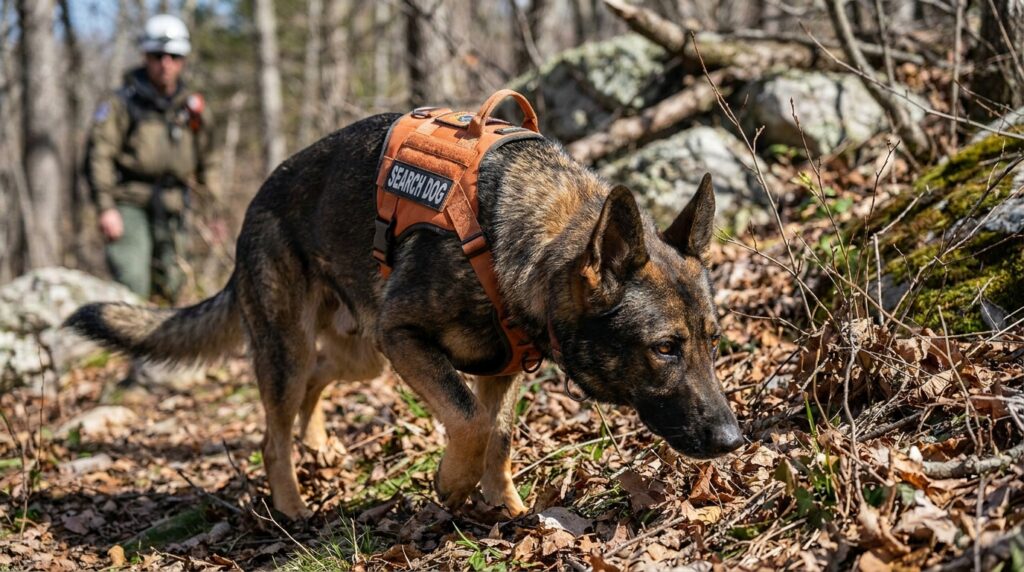
Most people already know German Shepherds work alongside police and military units, but the range of jobs they actually cover goes far beyond the obvious. They’re trained for narcotics detection, explosives detection, tracking fleeing suspects, crowd control, and even cadaver recovery in disaster zones. Each of these is a separate specialization requiring months of focused training — a K9 isn’t just “a police dog,” it’s usually trained for one or two specific tasks it does exceptionally well.
Search, Rescue, and Detection Skills
What often gets overlooked is how these dogs perform in search-and-rescue outside of criminal work entirely — earthquake response, missing hikers, avalanche recovery. Their combination of scent ability, stamina, and calm decision-making under chaos makes them one of the few breeds trusted to work off-leash in unpredictable, high-stakes environments. It’s not unusual for a single German Shepherd to search terrain for hours without losing focus, something that takes years of conditioning to build.
Beyond uniformed work, German Shepherds are also used as guide dogs, mobility assistance dogs, and PTSD support animals — quietly doing life-changing work that rarely makes headlines the way police work does.
Health & Lifespan Facts Every Owner Should Know
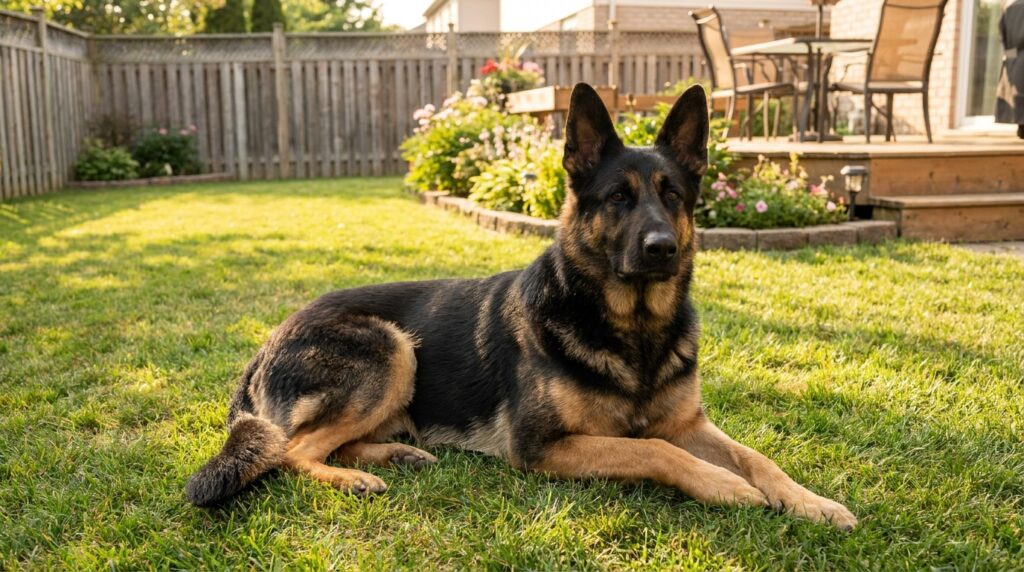
This is the part that doesn’t get enough attention in most “fun facts” articles, but it matters just as much as the impressive stuff. German Shepherds typically live between 9 to 13 years, and because of their size and rapid growth as puppies, they’re prone to specific health issues — hip and elbow dysplasia being the most common, along with degenerative myelopathy later in life.
What’s not talked about enough is how much of this is manageable, not inevitable. Responsible breeding, controlled exercise during the puppy growth phase, and weight management through adulthood significantly reduce the risk of joint problems. A lot of owners don’t realize that over-exercising a German Shepherd puppy before its growth plates close can actually cause more long-term joint damage than under-exercising it.
Digestive sensitivity is another lesser-known trait. Many German Shepherds deal with occasional bloating or food sensitivities, which is why sudden diet changes or low-quality fillers in food tend to affect them more noticeably than some other breeds. None of this makes them “fragile” — it just means their intelligence and work drive come with a body that needs a bit more attentiveness than people expect going in.
How Knowing These Facts Helps You Raise a Better German Shepherd
Here’s why any of this actually matters beyond trivia. Understanding a German Shepherd’s background changes how you train and live with one. Once you know they were bred for independent decision-making, not blind obedience, training approaches that rely purely on repetition often fall flat. These dogs respond far better to purpose-driven training — giving them a “job,” even a small one like carrying their own leash or fetching items, taps directly into that working-dog instinct.
Their sensory sharpness also means environment matters more than people assume. A German Shepherd cooped up with no mental stimulation isn’t just bored — it’s working against its own nature, and that’s usually where destructive habits like excessive chewing or barking come from. Rotating training exercises, scent games, and structured exercise isn’t a luxury for this breed, it’s closer to a requirement.
And knowing their emotional sensitivity changes how you handle stressful moments at home too. Loud arguments, sudden schedule changes, or tension in the house tend to affect them more visibly than other breeds, simply because they’re wired to notice. Owners who understand this tend to build calmer, more trusting relationships with their dogs — not because they trained harder, but because they worked with the breed’s nature instead of against it.
Frequently Asked Questions
Are German Shepherds actually the smartest dog breed?
They’re not ranked as the single smartest breed, but they consistently place in the top three worldwide, right behind Border Collies and Poodles in obedience and working intelligence studies. Where they stand out is applied intelligence — reading situations rather than just following commands.
Why were German Shepherds once called Alsatians?
After World War I, anti-German sentiment made people uncomfortable with the breed’s name, especially in the UK. Kennel clubs there rebranded them as “Alsatians,” a name that stuck for decades even though it’s the exact same breed.
Do all German Shepherds have straight tails?
Not always. While straight, saber-shaped tails are the breed standard, some German Shepherds are born with a natural curl due to genetics, occasionally linked to mixed ancestry further back in their lineage.
How much daily exercise does a German Shepherd really need?
Most need a minimum of two hours of physical and mental activity daily, ideally split across the day rather than one long session. Without it, their intelligence tends to turn into destructive behavior out of sheer boredom.
Final Thoughts — Why German Shepherds Continue to Amaze Us
After going through all of this, one thing becomes clear — the things that make German Shepherds famous are only the surface. Their loyalty, intelligence, and working ability didn’t happen by accident; they were shaped deliberately, generation after generation, starting from one man’s decision at a dog show over a hundred years ago.
What I find most compelling isn’t any single fact on this list — it’s how connected they all are. Their nose sensitivity explains their detection work. Their independent thinking explains their military and rescue history. Their emotional attentiveness explains why they’ve become such trusted family companions despite being bred for hard labor. Nothing about this breed exists in isolation.
German Shepherd Dog Facts If you already share your life with a German Shepherd, hopefully some of these facts help you understand your dog a little differently — not just as a pet, but as a breed carrying a very specific, very intentional history in everything it does. And if you’re still considering bringing one home, know that you’re not just getting a dog. You’re getting a working partner whose instincts run deeper than most people ever realize.