
Why I Decided to Test These SEO Tools Myself
SEO tools comparison for bloggers When I first started my blog, , I had almost no idea which SEO tool actually deserved my money. Every corner of the internet had a different opinion. Someone swore by Ahrefs, someone else pushed SEMrush as the only tool worth paying for, and a handful of bloggers insisted free plugins were all a beginner really needed.
Instead of trusting random recommendations, I decided to test things myself. Over the past few years, I’ve actually used four different tools on my own website — not just skimmed reviews, but published real content, tracked real traffic, and fixed real errors with each one. My journey started with Yoast SEO back when I was a complete beginner, then I moved to RankMath once I had a bit more experience under my belt. SEMrush entered the picture when I needed to understand what my competitors were doing with their backlinks, and Ahrefs came in last, when my site needed serious technical fixes.
This post isn’t a copy-paste comparison chart pulled from some database. It’s what I actually lived through — where each tool genuinely helped, where it let me down, and which one might be the right fit depending on whether you’re just starting out or already a few years into blogging.
My Experience With Ahrefs — The Error-Fixing Powerhouse
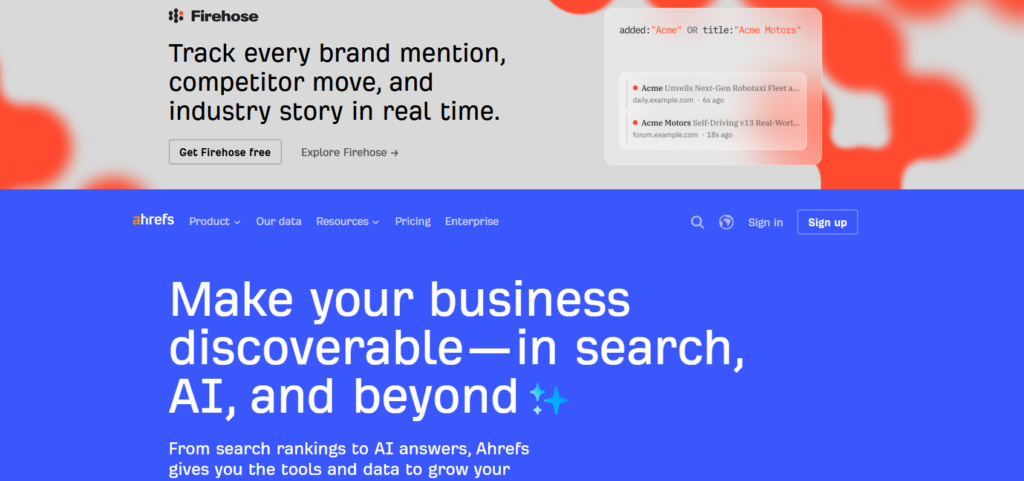
By the time I picked up Ahrefs, my blog already had a decent number of posts published, but something felt off. Traffic wasn’t growing the way it should have, and I couldn’t pinpoint why. That’s exactly where Ahrefs earned its place in my toolkit.
What struck me first was how much data it surfaced about my own site that I genuinely had no idea existed. Broken internal links, pages with duplicate content issues, orphaned posts that weren’t linked from anywhere else on the site — Ahrefs laid all of it out in a way that felt less like a report and more like a to-do list. I remember going through the Site Audit section for the first time and realizing how many small mistakes had quietly been holding my rankings back for months.
The real value for me wasn’t just spotting problems, it was the clarity Ahrefs gave me on how to fix them. Once I started cleaning up the errors it flagged, I noticed a real shift in how my pages performed over the following weeks. It felt less like guessing and more like actually understanding my own website for the first time.
The thing I appreciated most about Ahrefs was how honest the data felt. It didn’t just throw numbers at me — it explained why those numbers mattered. The Site Explorer feature became something I checked almost every week, not just for my own blog but to peek at what competing blogs in my niche were doing well. Seeing which of their pages pulled the most backlinks gave me actual direction instead of just guessing what topics to cover next.
I also liked that Ahrefs didn’t try to be everything at once. It stayed focused on what it does best — backlinks, site health, and keyword-level insights — and because of that focus, the data felt more reliable than tools that try to cover ten different jobs at once. Every time I fixed an issue it flagged, whether it was a missing alt tag or a slow-loading page, I could genuinely see the difference in how Google treated that page afterward.
Where Ahrefs Fell Short For Me
That said, Ahrefs wasn’t perfect for where I was as a blogger. The interface took me longer to get comfortable with than I expected — even simple tasks needed a bit of digging around before I found the right report. And honestly, for a solo blogger working with a limited budget, the pricing stung a little. I found myself using maybe 60% of what I was paying for, since features like the more advanced link-building tools were built more for agencies managing multiple client sites than for someone running a single blog.
My Experience With SEMrush — Best for Competitor Backlinks
If Ahrefs taught me what was wrong with my own site, SEMrush taught me what my competitors were doing right. I picked up SEMrush mainly because I wanted to understand where other blogs in my niche were getting their traffic from, and that’s exactly where it delivered.
The Backlink Feature That Changed My Strategy
The backlink analysis tool inside SEMrush became my go-to whenever I planned a new post. Instead of guessing which sites might link back to me, I could actually type in a competitor’s URL and see their entire backlink profile — who was linking to them, which pages earned the most links, and what kind of content attracted those links in the first place. That single feature reshaped how I approached content planning. I stopped writing posts just because I thought they’d be useful and started writing posts that had a real, visible chance of earning backlinks based on what was already working for others.
What surprised me was how it also showed toxic or low-quality backlinks pointing to my own site — something I hadn’t even considered checking before. Cleaning a few of those up gave me a bit more confidence that I wasn’t unknowingly hurting my own rankings.
Budget-Friendly Side of SEMrush
Compared to Ahrefs, SEMrush felt like it gave me more room to breathe budget-wise. The plans offered more flexibility for what a single blogger actually needs, without forcing me into agency-level pricing just to access the backlink features I cared about. It didn’t feel like I was paying for a dozen tools I’d never touch — the value felt more proportionate to what I was actually using week to week.
My Experience With RankMath — The WordPress Workhorse
By the time I started using RankMath, I already had a few years of blogging experience, and I wanted something that lived right inside my WordPress dashboard instead of a separate browser tab I had to keep switching to. RankMath fit that need almost perfectly.
What Makes RankMath Reliable
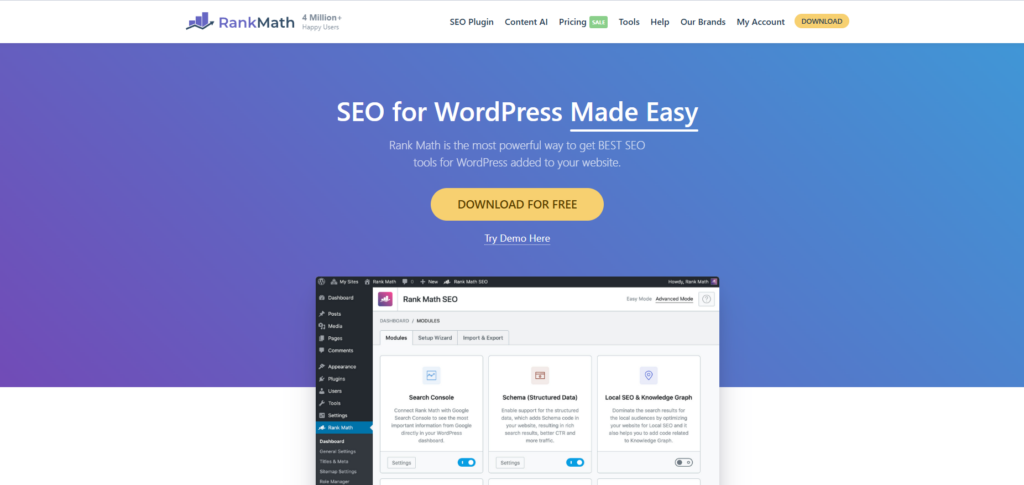
What I liked immediately was how it guided me while I was actually writing a post, not after I’d already published it. As I typed, it gave me real-time feedback on my keyword placement, my heading structure, whether my meta description was too short, and even flagged missing alt text on images before I hit publish. It felt like having a second pair of eyes checking my work as I went, rather than a report I had to read separately.
The schema markup setup was another thing that saved me a lot of time. Before RankMath, I had no real understanding of how schema worked or why it mattered for search visibility. RankMath handled most of it automatically, and I started noticing my posts picking up richer snippets in search results — star ratings, FAQ dropdowns, that kind of thing — without me having to touch a line of code.
For a WordPress-based blog like mine, having everything built into the same dashboard where I was already writing made the whole process feel less scattered. I wasn’t logging into three different platforms just to publish one post. Overall, RankMath has been a solid, dependable part of my workflow for the past several months, even if it doesn’t try to compete with tools like Ahrefs or SEMrush on backlink data.
My Experience With Yoast SEO — Where It All Started
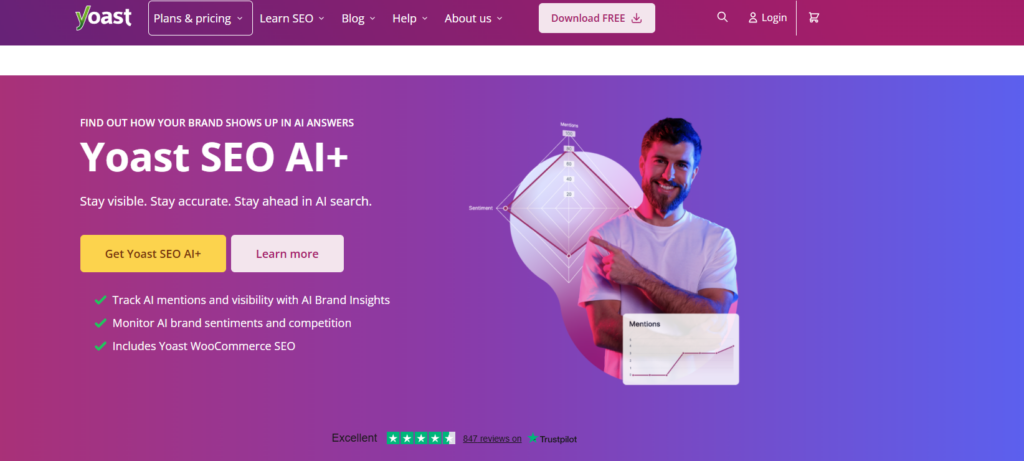
Before RankMath, before SEMrush, before I even understood what a backlink was, there was Yoast SEO. I used it for two full years, and looking back, it’s genuinely the tool that taught me how to think about SEO in the first place.
Why Yoast Was a Game-Changer For a Beginner Like Me
When I installed Yoast for the first time, I had no formal SEO knowledge at all. I didn’t know what a focus keyword was, I didn’t understand meta descriptions, and I definitely didn’t know why heading structure mattered. Yoast made all of that approachable. Its simple traffic-light system — red, orange, green — gave me an easy way to judge whether a post was ready to publish without needing to understand the technical reasoning behind every single recommendation.
That simplicity is exactly what let me write consistently during those two years. I wasn’t overwhelmed by dashboards full of metrics I didn’t understand yet. I was just focused on writing good posts while Yoast quietly nudged me toward better keyword usage, readable sentence structure, and proper heading hierarchy. Looking back, I genuinely believe those two years with Yoast built the SEO instincts I still rely on today, even after moving to other tools.
Why I Eventually Moved On
Eventually, as my blog grew and I wanted deeper on-page control, more schema options, and features that felt built for a slightly more experienced user, I made the switch to RankMath. It wasn’t that Yoast failed me — it simply outgrew its usefulness for where I was heading next.
Ahrefs vs SEMrush vs RankMath vs Yoast — What’s Actually Different?
After using all four tools across different stages of my blogging journey, the differences became a lot clearer to me than any comparison chart could have shown. Each one solved a different problem, and none of them was truly interchangeable with the others.
Pricing Comparison
Ahrefs sat at the higher end of what I was paying, and while the data quality justified some of that cost, I felt like I was paying for features built more for agencies than solo bloggers. SEMrush felt more reasonable for what I actually used, especially the backlink and competitor tools. RankMath and Yoast, being WordPress plugins rather than external platforms, were the most budget-friendly by far — both offer strong free versions, with RankMath’s free tier giving away noticeably more than I expected compared to what I remembered from Yoast’s free plan.
Ease of Use for Beginners
If I’m being fully honest, Yoast was the easiest tool I’ve ever used, which is exactly why it worked so well when I was starting out. RankMath came a close second, still simple but with more depth once you needed it. Ahrefs and SEMrush both had a real learning curve — not impossible to figure out, but not something I’d hand to a first-time blogger without expecting some confusion in the first few weeks.
Best Use Case for Each Tool
Best for Backlink Analysis
Between the two, Ahrefs edged ahead for pure backlink accuracy, but SEMrush wasn’t far behind and gave me more usable competitor insights for the price.
Best for Beginners
Yoast, without question. It taught me the fundamentals without overwhelming me.
Best for WordPress Users
RankMath. Living inside the dashboard while writing made my workflow noticeably faster.
Best for Budget
RankMath’s free plan again — it covered more of what I actually needed than I expected from a free tool.
How AI Is Changing SEO Jobs and Future Opportunities
One thing I’ve noticed clearly over these past few years is that SEO tools themselves have quietly become smarter. When I first started with Yoast, the suggestions were fairly basic — check your keyword density, check your heading structure. Now, even RankMath’s newer features lean on AI to suggest content improvements while I write, and SEMrush has started blending in visibility tracking for how AI-powered search results and answer engines like ChatGPT or Google’s AI Overviews are picking up content. This shift isn’t something I read about — I watched it happen in real time inside the same tools I already use.
New Roles Emerging Because of AI SEO Tools
What this tells me is that SEO as a job isn’t disappearing, but it’s definitely reshaping itself. A few years ago, most of my time went into manual keyword research and checking rankings one by one. Now a lot of that grunt work happens automatically, which means the actual value I bring shifts toward strategy — deciding what to write about, how to structure it for both human readers and AI-driven search, and how to build genuine authority rather than just stuffing keywords. New roles I’ve noticed growing around this shift include AI content strategists, people who specialize in optimizing for AI Overviews and answer engines specifically, and technical SEO specialists who understand how to make a site readable by both search crawlers and AI models at once.
Skills You’ll Need to Stay Relevant
Based on my own experience switching between these four tools, the skill that mattered most wasn’t memorizing every feature of a platform — it was understanding why a recommendation was being made in the first place. Anyone starting out today should focus on understanding search intent, structuring content clearly, and getting comfortable reading data rather than just reacting to red and green traffic lights. The tools will keep changing, but that underlying judgment is what actually keeps a blogger relevant.
Which SEO Tool Should You Choose?
If you’re asking me directly, based on everything I’ve walked through above, my honest answer depends entirely on where you are right now as a blogger.
If you’re a complete beginner who’s never touched SEO before, start with Yoast. Don’t overthink it. The simplicity that helped me for two years will help you build the same foundational habits without drowning you in data you don’t understand yet.
If you’re already comfortable with the basics and running a WordPress site, RankMath is where I’d point you next. It gave me more control, better schema handling, and a workflow that fit naturally into how I already write.
If your blog has grown enough that competitor research and backlink strategy actually matter to your growth, that’s when SEMrush earns its price tag. It changed how I planned content, not just how I optimized it.
And if you’ve reached a point where technical errors are quietly holding your site back — broken links, orphaned pages, crawl issues you can’t see with the naked eye — Ahrefs is worth the investment, even with its steeper learning curve and higher cost.
Final Thoughts — My Honest Recommendation
Looking back at these past few years, I don’t think there’s a single “best” SEO tool, and I’m genuinely skeptical of anyone who claims there is. Each of these four tools solved a different problem for me at a different stage of my blogging journey. Yoast taught me the fundamentals. RankMath streamlined my daily workflow. SEMrush sharpened my content strategy. Ahrefs cleaned up technical mistakes I didn’t even know existed.
If I had to start over today, I’d probably still follow the same path — begin simple, then add tools as my actual needs grew, instead of paying for features I wasn’t ready to use yet.
FAQs
Is Ahrefs better than SEMrush for beginners?
Not really, in my experience. Ahrefs has a steeper learning curve and leans more toward users who already understand backlink data. If you’re just starting out, SEMrush’s interface felt slightly more approachable, though honestly neither tool is where I’d recommend a true beginner start.
Is RankMath better than Yoast SEO?
It depends on what stage you’re at. RankMath offers more features and a more generous free plan, which is why I eventually switched to it. But Yoast’s simplicity is exactly what made it such a strong starting point for me two years earlier. Neither is objectively “better” — they served me at different points in my journey.
Do I need a paid SEO tool as a new blogger?
Not right away. I spent two full years on Yoast’s approach to fundamentals before I ever paid for a tool like SEMrush or Ahrefs. Free versions of RankMath and Yoast genuinely cover what a new blogger needs to get started.
Will AI replace SEO jobs?
Based on what I’ve seen happen inside these tools over the past few years, AI is automating the repetitive parts of SEO, not the job itself. The strategic thinking — understanding intent, planning content, building real authority — still needs a human behind it, even as the tools around that work keep getting smarter.